

The Best Jewelry Trends for Men in 2026
A 3 mm chain and an 8 mm chain tell two completely different stories. You only notice the first one when somebody is standing close. The second is the first thing anyone sees.
That, in short, is what men's jewelry in 2026 is about: not whether you wear something, but how loudly you let it speak. In this guide we go through the trends one by one and look at which sizes, materials and combinations work, with concrete millimeters and centimeters so you do not have to guess.

1. Iced out jewelry: still the biggest
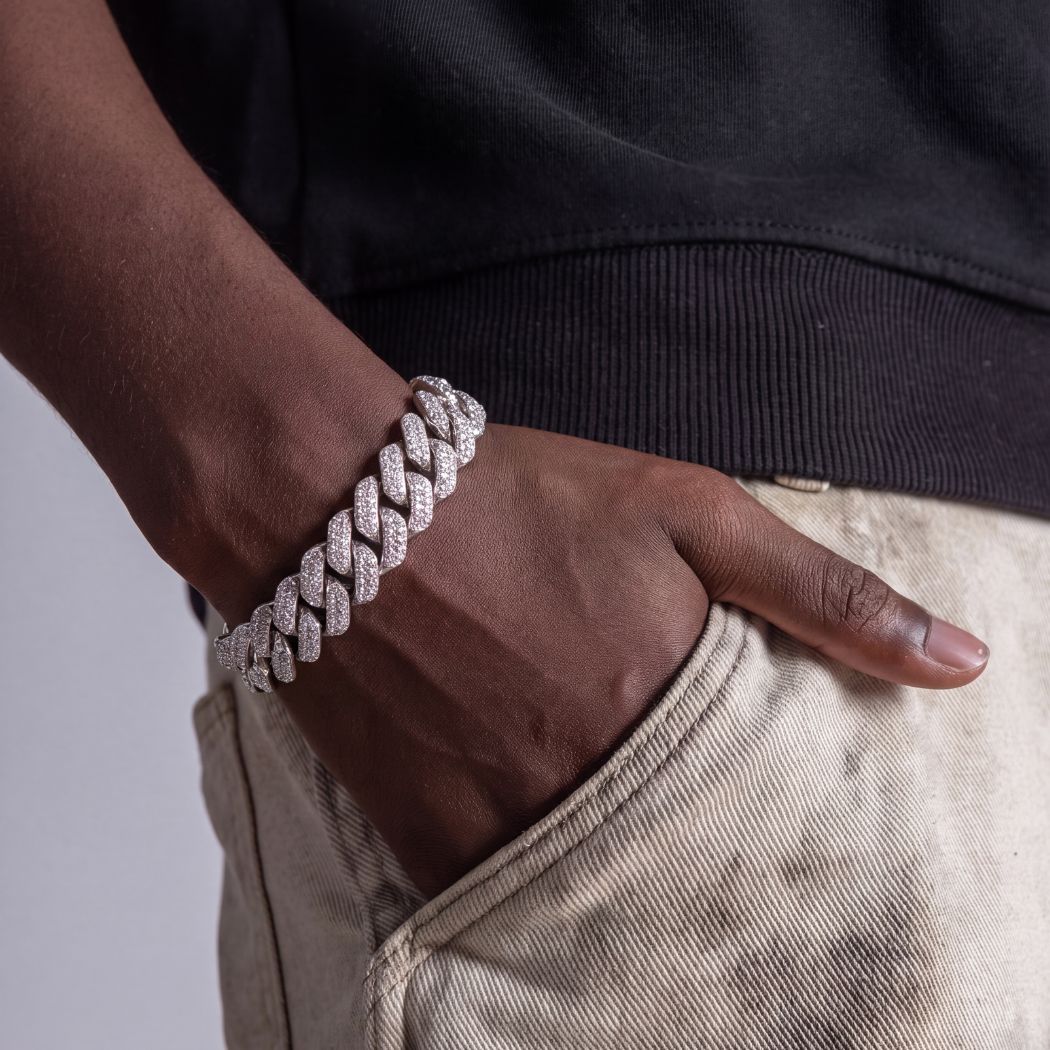
Fully set with stones, from clasp to clasp. Iced out jewelry has been the most recognizable style in hip-hop and streetwear for years, and that does not change in 2026.
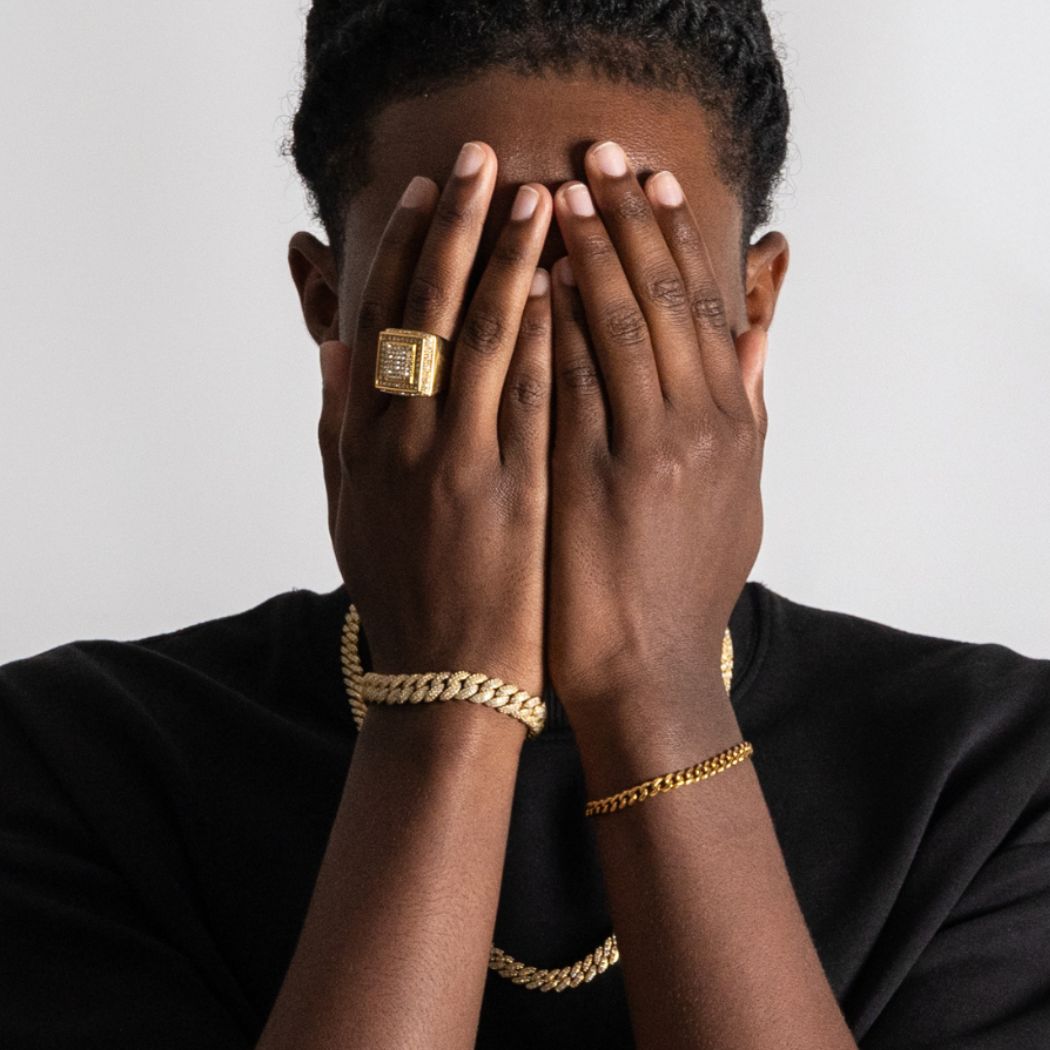
What is changing: the widths are getting more sensible. Where 12 mm and wider was normal a few years ago, the sweet spot now sits between 6 and 10 mm. Wide enough to stand out, narrow enough to wear under a jacket without it becoming uncomfortable.
Wear one per outfit. Combine an iced out chain with a plain T-shirt or hoodie in a single color. The moment you add print or texture, the chain loses the fight for attention.

2. Minimalist: what you wear every day
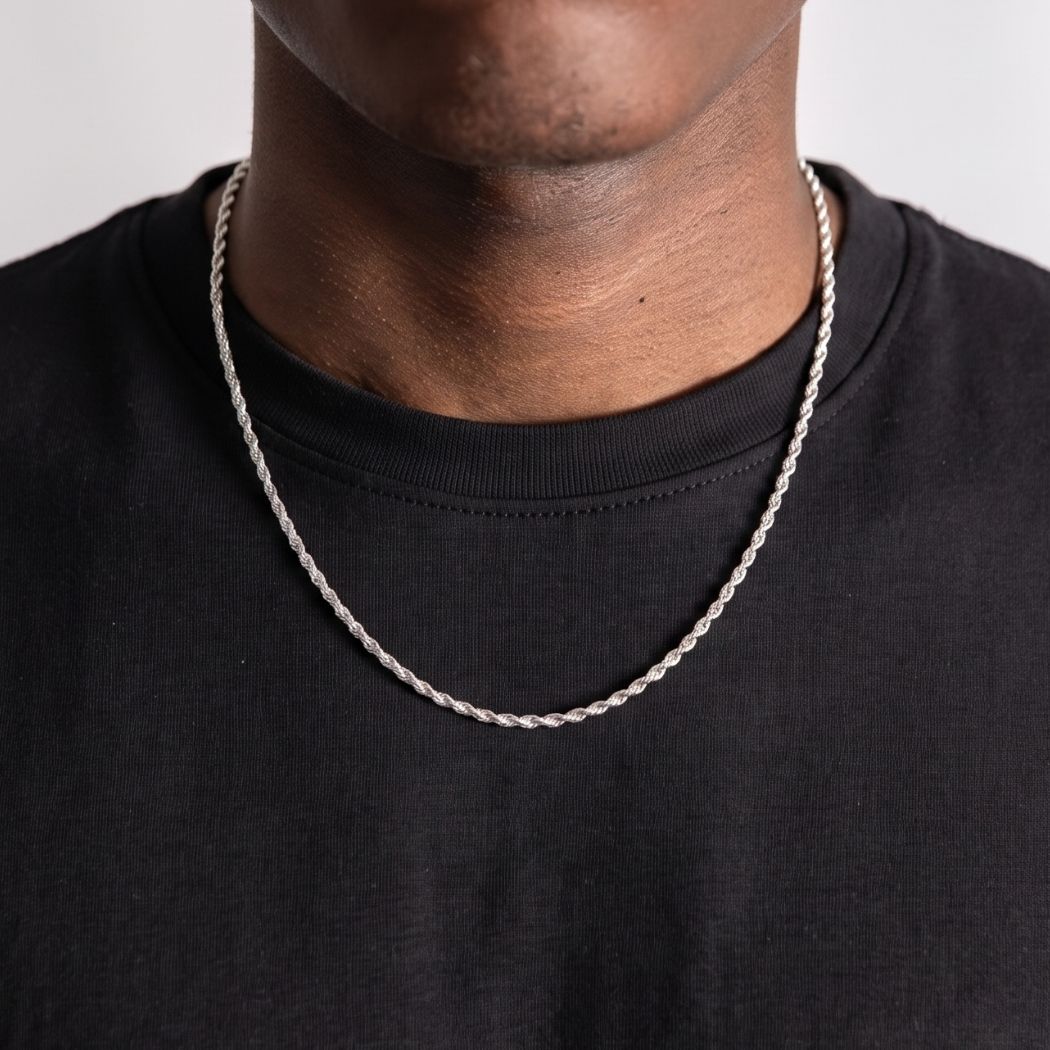
Not every day is a day to stand out. For daily wear anything between 2 and 3 mm works: visible if you look for it, invisible once you button up a shirt.
This is also the category where people most often start. A thin chain of 2 mm is the safest first purchase there is. It goes with every outfit and you wear it literally every day.
Combine it with a subtle ring or a narrow bracelet of 3 mm and you have a complete look that never shouts for attention.

3. Layering: the 10 centimeter rule
Wearing several chains at once nearly always goes wrong for the same reason: too little difference in length. They cross, they tangle, and it looks messy.
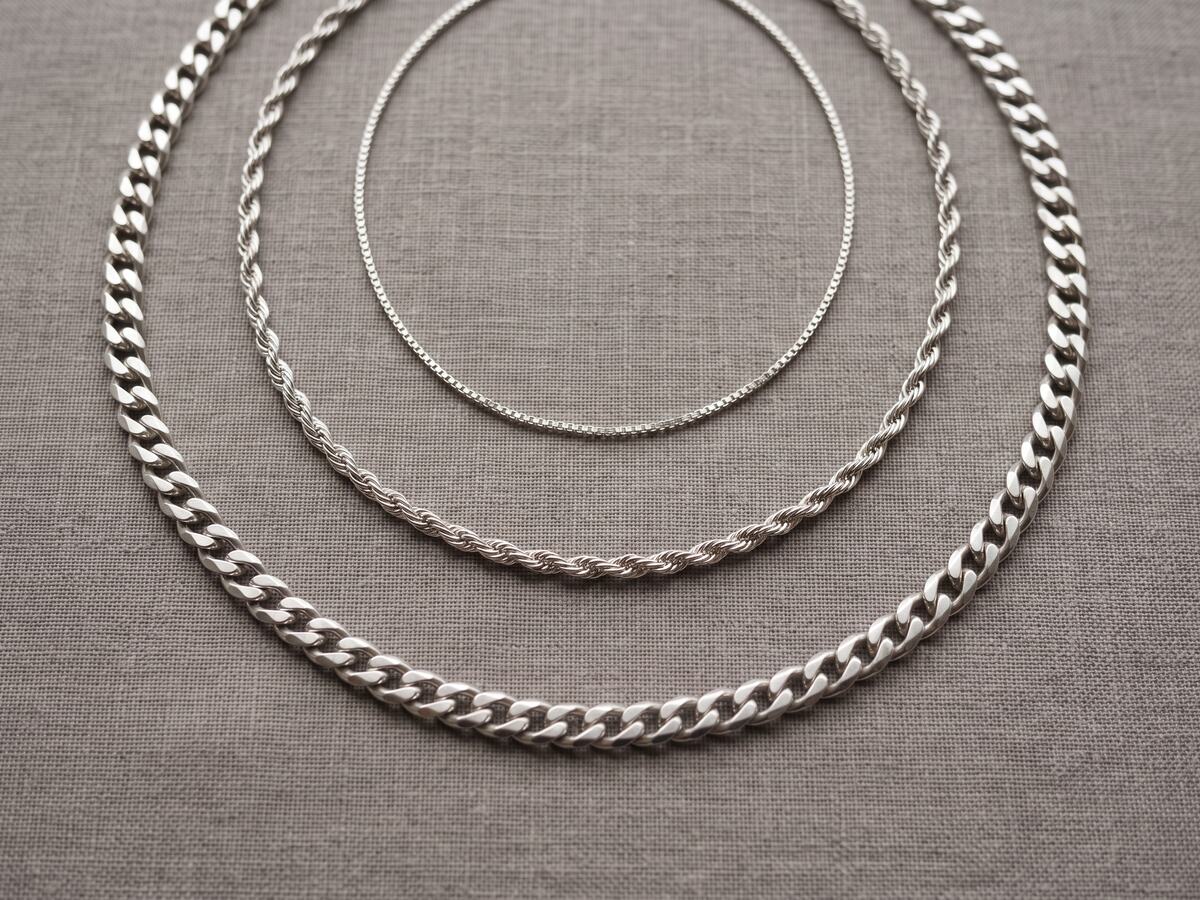
The rule: keep at least 10 centimeters (4in) between each chain. A combination that almost always works is 50 cm (20in) with 60 cm (24in), or 45, 55 and 65 cm (18, 22 and 26in) if you wear three.
Vary the width as well, not only the length. Two chains that are both 5 mm look undecided. One of 2 mm next to one of 6 mm looks like a choice. Start with two. Add the third only once the first two feel comfortable.

4. Mixing gold and silver
The old rule that gold and silver do not go together has gone. But there is technique to it.
Mixing works best when one metal clearly takes the lead. Three gold pieces and one silver look like a deliberate choice. Two and two look like indecision.
The easiest way to start: keep your chain and bracelet in the same metal and let one ring be the exception.

5. Statement pieces: from 15 mm
There is a concrete threshold above which a pendant goes from accessory to statement, and it is around 15 mm. Below that it is a detail. Above it, it is the first thing anyone looks at.
On the Iced Out Cross Chain with colored stones the 15 mm cross sits exactly at that threshold. That cross is not a pendant but part of the chain itself, so it does not add to the length. Big enough to wear, not so big that it takes over your outfit.
Statement pieces need room. Wear no more than one and keep the rest small. Large rings and chunky Cuban links follow the same logic.

6. Materials: where the difference really sits
This is where it gets concrete, because the differences are measurable.
925 sterling silver is 92.5% pure silver, the rest is copper for strength. Pure silver is too soft to wear, hence the alloy.
Moissanite scores 9.25 on the Mohs hardness scale, against 10 for diamond. The interesting part is the refractive index: 2.65 against 2.42. In plain terms: moissanite sparkles more than diamond, at a fraction of the cost.
Stainless steel in silver tone is the reason some jewelry can come along into the shower: it is bare polished steel, harder than silver. Gold-tone steel still comes off before the shower, and every piece comes off before the pool.

Bracelets: measure your wrist, do not guess
Measure your wrist and add about 1.5 cm. That is your size.
If you come out under a 17 cm (6.7in) wrist circumference, you are on 18 cm (7.1in). Above that, you go to 20 cm (7.9in). Our cuban bracelets run in 18, 20 and 22 cm (7.1, 7.9 and 8.7in), the tennis bracelets in 18 and 20 cm (7.1 and 7.9in), and the cluster bracelet in 18 and 21 cm (7.1 and 8.3in). If you are in doubt, check the bracelet size chart.
After that it depends on the type. A link bracelet may sit tight. A tennis or iced out bracelet should not: it has to be able to turn with you, so the stones keep catching a different angle.
Too loose is a real problem here. The clasp then turns to the top of your wrist and you spend the whole day looking at the clasp instead of at the stones.
What wears, and what you can do about it
Three constructions, three different ways of growing old.
Stainless steel has the hardest outer surface of the three. In silver tone it is bare polished steel, and that tolerates water, including the shower. In gold tone the color is five layers of PVD, bonded to the metal at molecular level in a vacuum chamber instead of being electroplated; that version comes off before the shower, the pool and the gym.
Copper alloy with five layers of PVD gets the same finish, but the alloy underneath is more sensitive to moisture than steel. This one does not come along into the shower, into the pool or to the gym either.
Solid 925 sterling silver has no layer that can wear through, because what you see is the metal itself. Softer, so fine signs of use show sooner. But a jeweler can polish or repair it, and the metal has value of its own.
18K gold plated over a silver core sits in between. If that layer wears through, silver appears instead of base metal, and a goldsmith can have it replated.
Practically: if you want one piece of jewelry that can stay on in the shower, take silver-tone stainless steel. If you want something you can still have restored in ten years, take silver.
Choose on your build, not on gut feeling
Chain length is not a matter of taste, it is a matter of measurement.
- 45 cm (18in): sits snug at the base of the neck. Visible with an open collar.
- 50 cm (20in): just below the collarbone.
- 55 cm (22in): on the top of the breastbone. The length chosen most often, works under and over a T-shirt.
- 60 cm (24in) and longer: mid chest and lower, also over clothing. The layering length.
Are you broader built, or do you have a shorter neck? Go one size longer than you would think. A chain that sits too tight makes both look shorter.
The four mistakes you spot straight away
- Too much at once. More than three visible pieces and it turns into noise.
- Every piece the same width. Without contrast nothing stands out.
- Keeping jewelry on in the shower. Shampoo and soap leave a dull film behind. Silver-tone stainless steel survives it; gold-tone steel and gold plating do not.
- Perfume after putting it on. Spray first, put your jewelry on afterwards. Alcohol attacks the coating.
Care in thirty seconds
Polish briefly with a dry, soft cloth after wearing. That takes off skin oil, and skin oil is what makes jewelry dull. Store pieces separately so they do not rub against each other. Take them off before swimming: chlorine is more aggressive than anything else you expose them to.
Nothing more than that. With normal use, jewelry lasts for years.
Where do you start?
Not wearing anything at the moment? Start with one chain of 2 to 3 mm at 50 cm (20in). Wear it for a month. After that you will know for yourself whether you want more, and what.
Already wearing something? The next step is almost always a bracelet in the same metal. That completes a look without you having to learn anything new.
Browse the full men's jewelry collection.
Frequently asked questions
Which chain length is standard for men?
55 cm (22in) is the length chosen most often and falls on the top of the breastbone. 50 cm (20in) falls just below the collarbone, 45 cm (18in) sits snug at the neck and 60 cm (24in) falls mid chest.
How many chains can you wear at once?
Two or three works best, with at least 10 cm (4in) of length difference between them so they do not cross. Vary the width as well, for example 2 mm next to 6 mm.
Is moissanite better than diamond?
Moissanite sparkles more: the refractive index is about 2.65 against 2.42 for diamond. Diamond is harder, 10 against 9.25 on Mohs. For daily wear the difference in hardness is not noticeable, the difference in price is.
What is an iced out chain?
A chain that is set with stones along its full length. The most worn widths sit between 6 and 10 mm.
Can you wear jewelry in the shower?
Silver-tone stainless steel, yes, because it is bare steel with no coating. Gold-tone steel with PVD, gold plating, 925 silver and iced out pieces are better taken off. Soap residue makes them dull and chlorine attacks the finish.
When is a pendant a statement piece?
From about 15 mm. Below that it is a detail, above it the center of your outfit.