

Men's Jewelry Trends for 2027
Most trend articles are a guess with nice photos attached. This one is not. The first six points below come from our own sales figures over the past twelve months, and where something rises or falls, we say by how much.
At the end there are two things we expect rather than measure. Those are marked as such, so you can decide for yourself what to do with them.

1. The king's link is still the engine, and gold beats silver two to one
Three of our four best selling items are a king's link. That is not a small lead: the gold colored 5 mm king's link chain outsells the identical chain in a silver finish by more than two to one.
What matters more for 2027 is that the lead is growing rather than leveling off. Of all the orders this chain took over the past year, almost half landed in the final four months. Spread evenly across the year that would have been a third.
The reason is probably boring: the king's link is the only widely worn link that looks thick without being flat. It builds in height instead of in width, so 5 mm of king's link fills more than 5 mm of cuban. Anyone who wants volume without going to a 10 mm chain ends up here.
2. Chains are getting longer, and the gap is smaller than everyone thinks
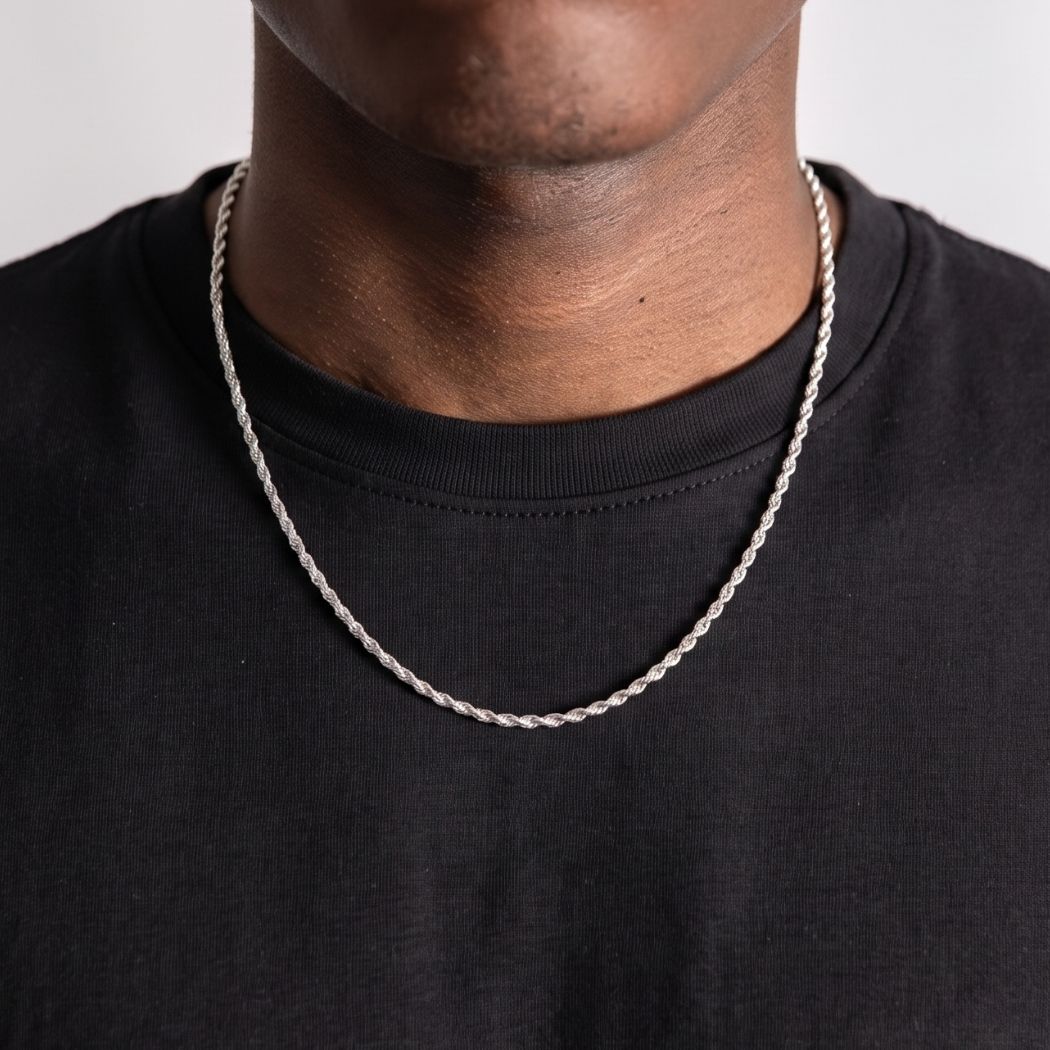
On that king's link chain, 55 cm (22in) is the length most men pick. That is the expected part. What is not expected: 65 cm (26in) and 75 cm (30in) both sit within ten percent behind it. In practice these three lengths are equally popular, while almost every size guide names 50 to 55 cm (20 to 22in) as the standard for men.
That means something for how you choose. 55 cm (22in) falls on the top of your breastbone and fits under a shirt. 65 cm (26in) falls below your chest and is meant to be worn over a T-shirt. 75 cm (30in) hangs down to your stomach and only works if the chain is wide enough to carry that length.
With bracelets the picture is tighter: more than eight in ten pick 20 or 22 cm (8 or 8.7in). The 18 cm (7in) many stores treat as the middle size is a niche pick here, not a standard.

3. Solid 925 is gaining ground on coated steel
This is the clearest shift in our figures, and the one we would bet on hardest for 2027. The 4 mm cuban chain in 925 sterling silver took the large majority of its yearly volume in the last four months. More than four in five of all its orders landed in that final stretch of the year.
What that probably tells us: people who have already owned a coated chain buy solid the next time around. With 925 sterling silver the metal runs all the way through, so scratches can be polished out and the color cannot wear off. The trade-off is that it tarnishes, so you do have to do something about it now and then. That is a trade more and more people are making on purpose.
In practice: 925 is softer than stainless steel, so a fine 925 link of 2 mm is more vulnerable than the same size in steel. If you want solid silver and wear it daily, do not go below 3 mm.

4. With gold plating it goes the other way: thinner
Alongside that move toward solid silver, we see exactly the opposite in 18K gold plating. The 18K gold plated king's link chain and bracelet in 2.5 mm rose sharply over the past year, with most of their volume in the final months.
That is less contradictory than it looks. Gold plating is a finish layer, and that layer wears fastest where the chain rubs against itself. A finer link has less of that contact and reads more like jewelry than a statement. Anyone wearing gold for the color rather than the volume picks narrow.
The practical rule that follows: choose gold plating under 3 mm and solid silver above 3 mm. That way you play to the strength of both instead of the weakness.
5. Iced out goes wider, not narrower
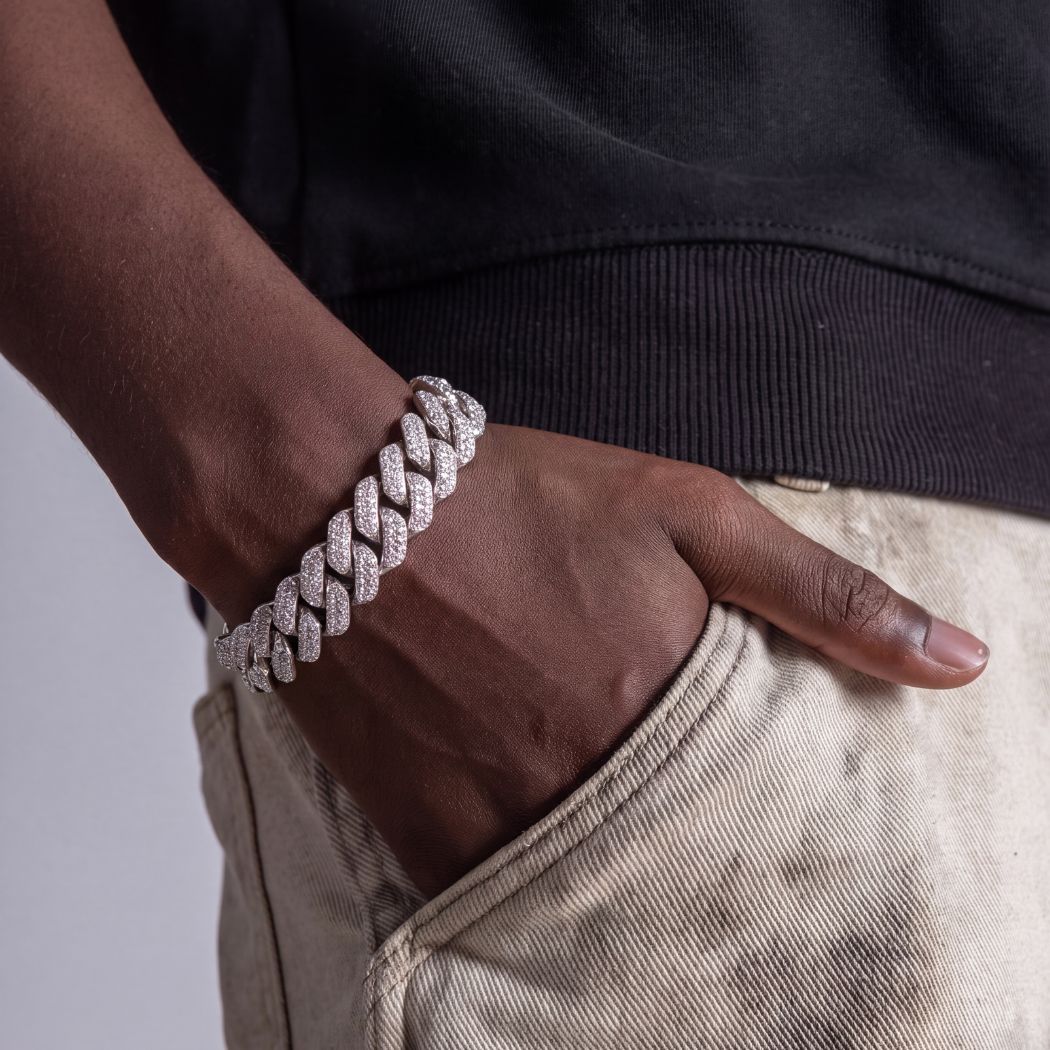
The expectation was that everything would get smaller. With iced out the opposite is happening. Of our iced out cuban chain in 6, 8 and 10 mm, the 10 mm is the best selling width, not the 6 mm.
That is more logical than it sounds. You do not buy iced out to be subtle. Anyone who wants subtle buys a plain link. The average buyer of a fully set chain deliberately picks visibility, and at that point 6 mm is a half measure.
What does change is the combination. A 10 mm chain is worn on its own, without a second chain beside it, and that is exactly how it goes out the door here. If you want to stack, start at 6 or 8 mm. If you are unsure what iced out actually means, our guide on what iced out means explains the stones and settings.

6. The bracelet is growing faster than the chain
With both the king's link and the iced out cuban, the bracelet grew faster over the past year than the matching chain. Across the bracelets, almost half of the yearly volume landed in the last four months, a stronger concentration than the chains in the same line.
That fits how people start. A bracelet is the easiest way into men's jewelry: you see it yourself all day, other people only see it when you move your hand, and it demands no change at all to what you are wearing. Anyone unsure whether jewelry suits them finds out on the wrist, not around the neck.
For 2027 that mostly means something for gifts. A bracelet of 20 or 22 cm (8 or 8.7in) is the safest bet you can make without asking someone their size.
7. What we expect: gold and silver together
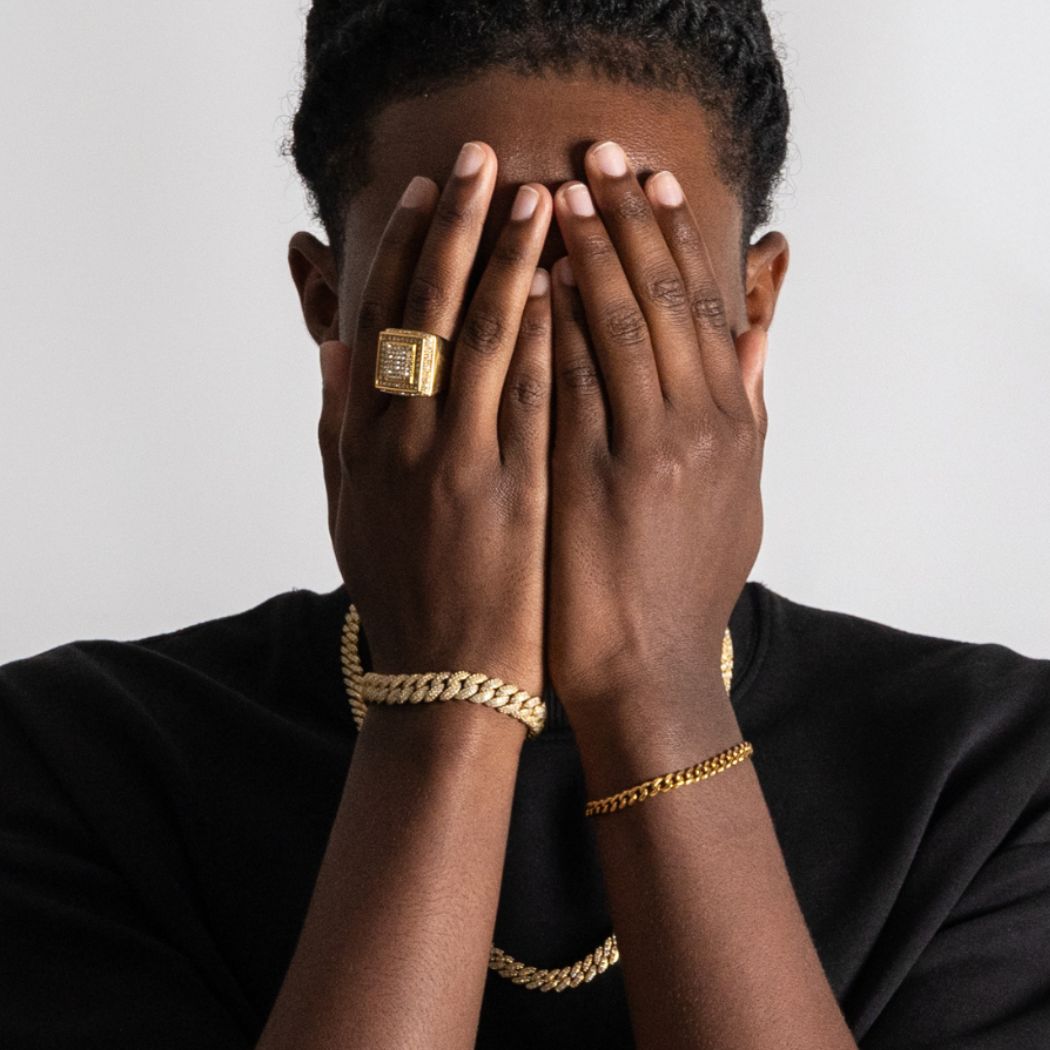
From here on it is expectation rather than figures, so read it as an opinion. The rule that you never wear two colors of metal together has been fading for years, and we think 2027 is the year it finally dies for men.
If you do it, do it on purpose. Two things separate deliberate from accidental. Make sure the two pieces clearly differ in width, so the eye sees a headline and a footnote. And keep it to two colors, not three.
The easiest way in is a gold chain with a silver bracelet, or the other way round. Mixing in one place, two chains in different colors for instance, is the hard version and needs a real difference in link type.

8. What we expect: layering with real length difference
This is expectation too, not measurement. Layering almost always goes wrong for the same reason: people pick two chains that differ too little, after which the two cross each other all day and end up tangled.
The rule of thumb that does work: at least 10 cm (4in) difference in length and a visible difference in width, with the longer chain being the wider one. So 50 and 60 cm (20 and 24in), or 55 and 65 cm (22 and 26in). Three chains is possible, but start with two and add the third only once the first two hang right on their own.
If you wear a pendant, count it in. A pendant adds its full height to the lowest point of the chain, while extra chain length spreads over two sides. So 8 cm of extra chain gives only 4 cm of extra depth, and a 4 cm pendant wipes out that gain in one go.

9. Engraving is the one thing nobody can copy from you
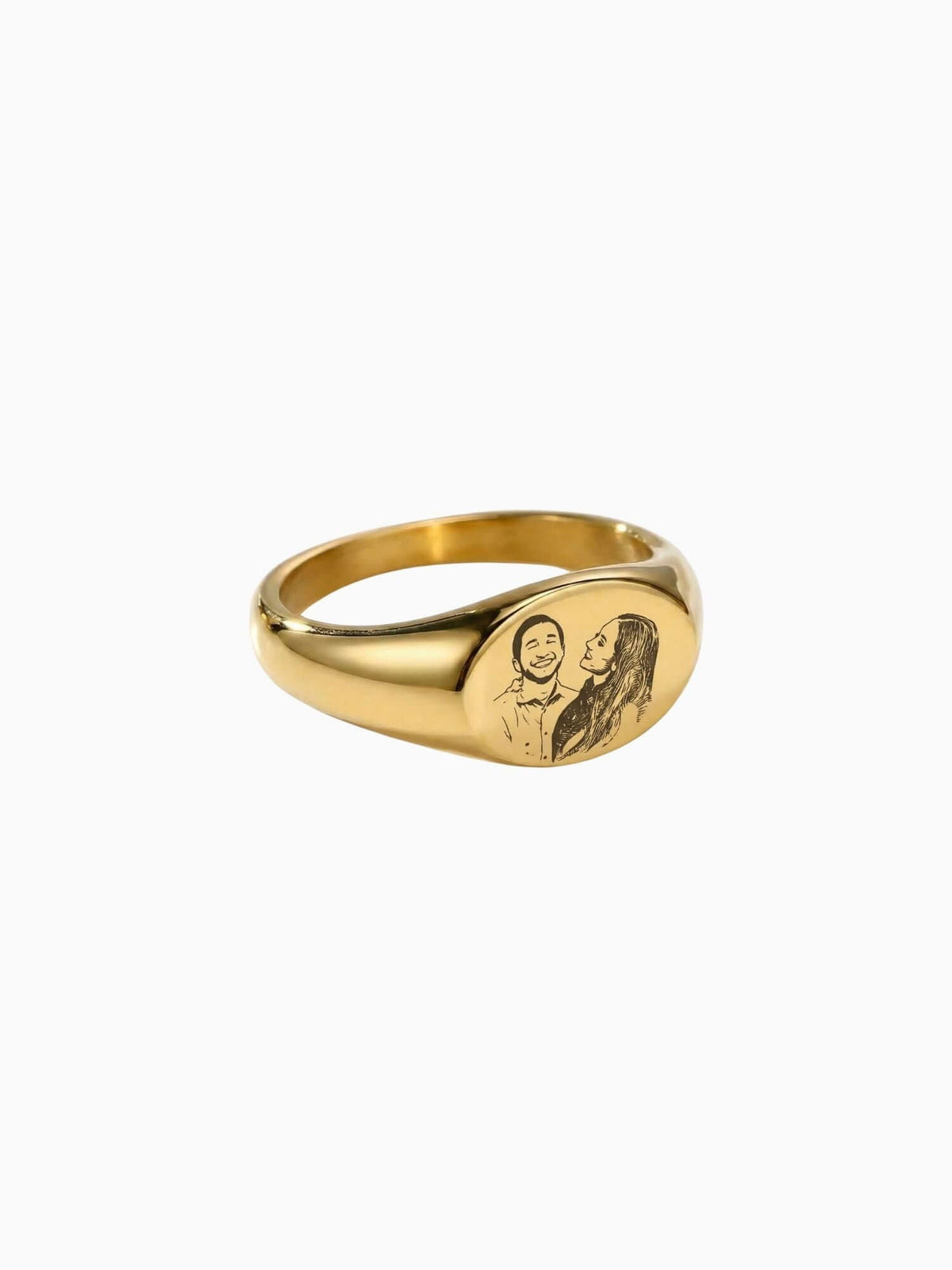
Anyone can buy a link. A date on the top of a signet ring or initials on a dog tag they cannot. With engravable jewelry the value sits in what is on it, and that makes it immune to whether the link is still in fashion next year.
Two practical things. On our signet rings the engraving goes on the flat top, not inside the band, so choose text you are happy for others to see. And keep it short: on a signet ring face of normal size, two or three characters are clearly legible, a whole name almost never.

What we would skip in 2027
- A second chain in the same width. Two 5 mm chains beside each other look like one wide chain that does not hang well. Difference in width matters more than difference in color.
- Gold plating above 5 mm for daily wear. The wider the link, the more it rubs against itself, and that is exactly where a finish layer gives up first.
- Three colors of metal. Two is a choice, three is an accident.
- A fine 925 link if you never take it off. Solid silver is softer than steel. Under 3 mm and worn day and night is asking for a deformed link.
Where do you start?
No jewelry yet and you want to start in 2027? A king's link bracelet of 20 cm (8in). Easiest thing to start with, best chance you keep wearing it.
Already have a chain and want to expand? Add a second one with at least 10 cm (4in) difference and a clearly different width, or move to solid 925 sterling silver in 3 or 4 mm.
Want to be seen? Then 10 mm from the iced out chains is the honest choice, and not 6 mm because that feels safer. And if you go for solid silver, read how to keep it clean in our guide on how to clean silver jewelry, because that is the only maintenance that comes with it.
Frequently asked questions
What is the most important men's jewelry trend for 2027?
The king's link remains the dominant link, and the gold colored version outsells the identical chain in a silver finish by more than two to one. Alongside that, demand is shifting toward solid 925 sterling silver instead of coated steel, while gold plating is being picked narrower.
What chain length are men wearing in 2027?
55 cm (22in) is the length most men pick, but 65 cm (26in) and 75 cm (30in) both sit within ten percent behind it. 55 cm (22in) falls on the top of the breastbone, 65 cm (26in) below the chest and 75 cm (30in) down to the stomach. Longer lengths only work if the chain is wide enough to carry them.
Can you wear gold and silver together?
Yes, and that rule is disappearing fast. Do make sure the two pieces clearly differ in width, so the eye sees a headline and a footnote, and keep it to two colors. The easiest version is a gold chain with a silver bracelet, or the other way round.
Is iced out getting narrower in 2027?
No, in our figures it goes the other way. Of the iced out cuban chain in 6, 8 and 10 mm, the 10 mm is the best selling width. Anyone buying a fully set chain deliberately picks visibility, and at that point 6 mm is a half measure.
How much difference should there be between two chains when layering?
At least 10 cm (4in) difference in length and a visible difference in width, with the longer chain being the wider one. So 50 and 60 cm (20 and 24in), or 55 and 65 cm (22 and 26in). Too little difference is why two chains cross each other and end up tangled.
Should I choose solid silver or gold plating?
Choose gold plating under 3 mm and solid 925 sterling silver above 3 mm. Gold plating is a finish layer that wears fastest where the link rubs against itself, so finer is better. Solid silver is softer than steel, so there thicker is better.