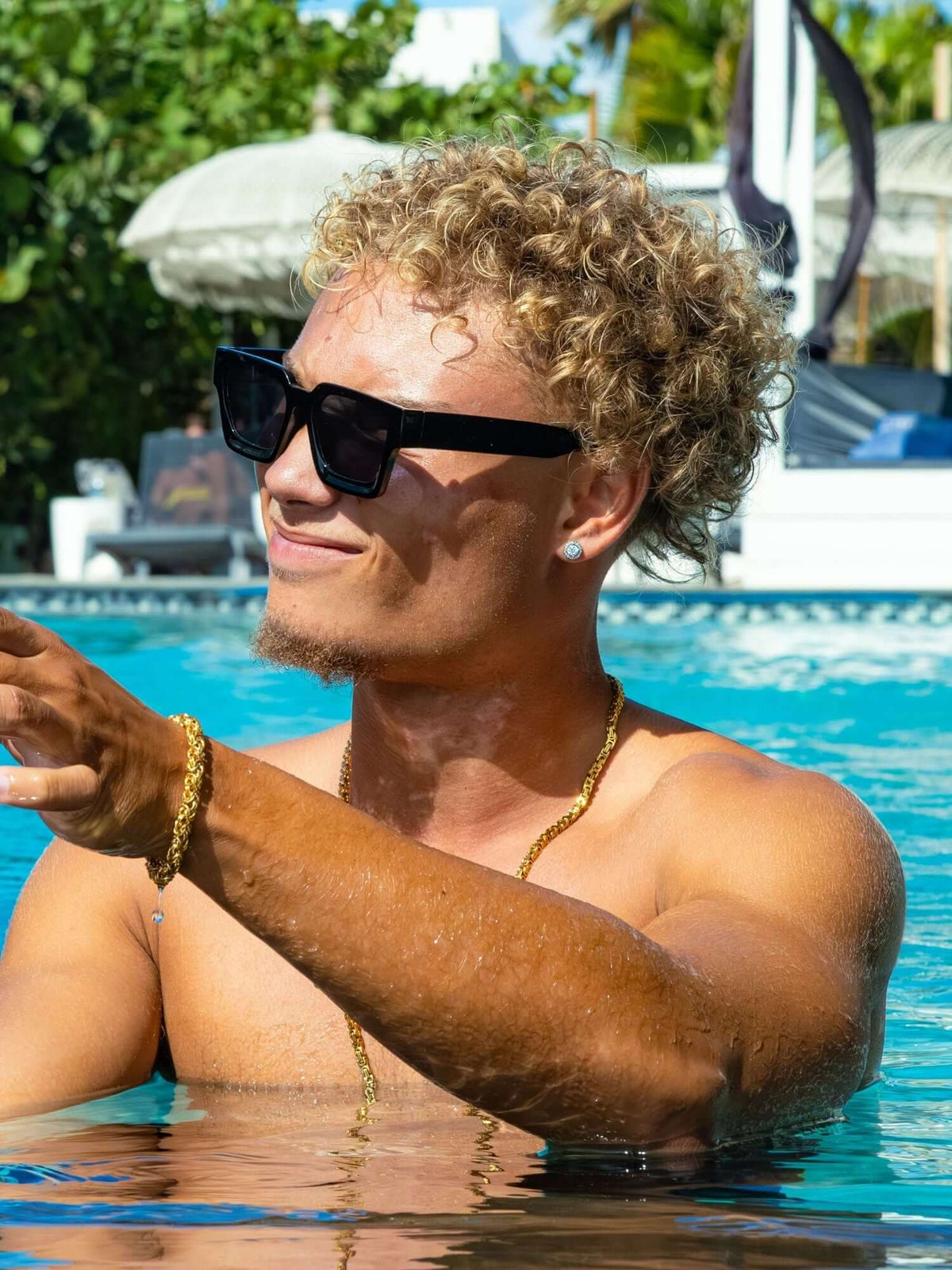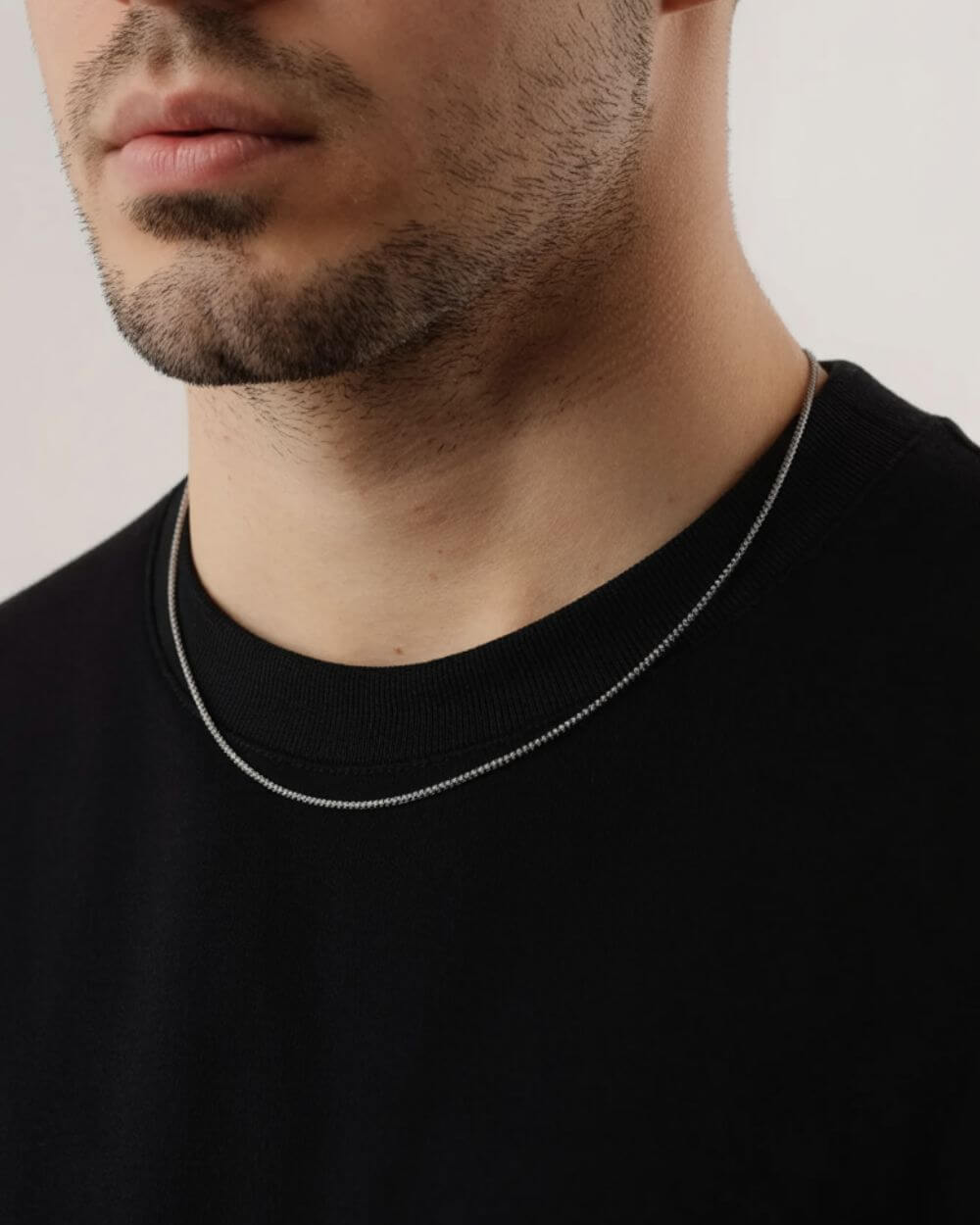

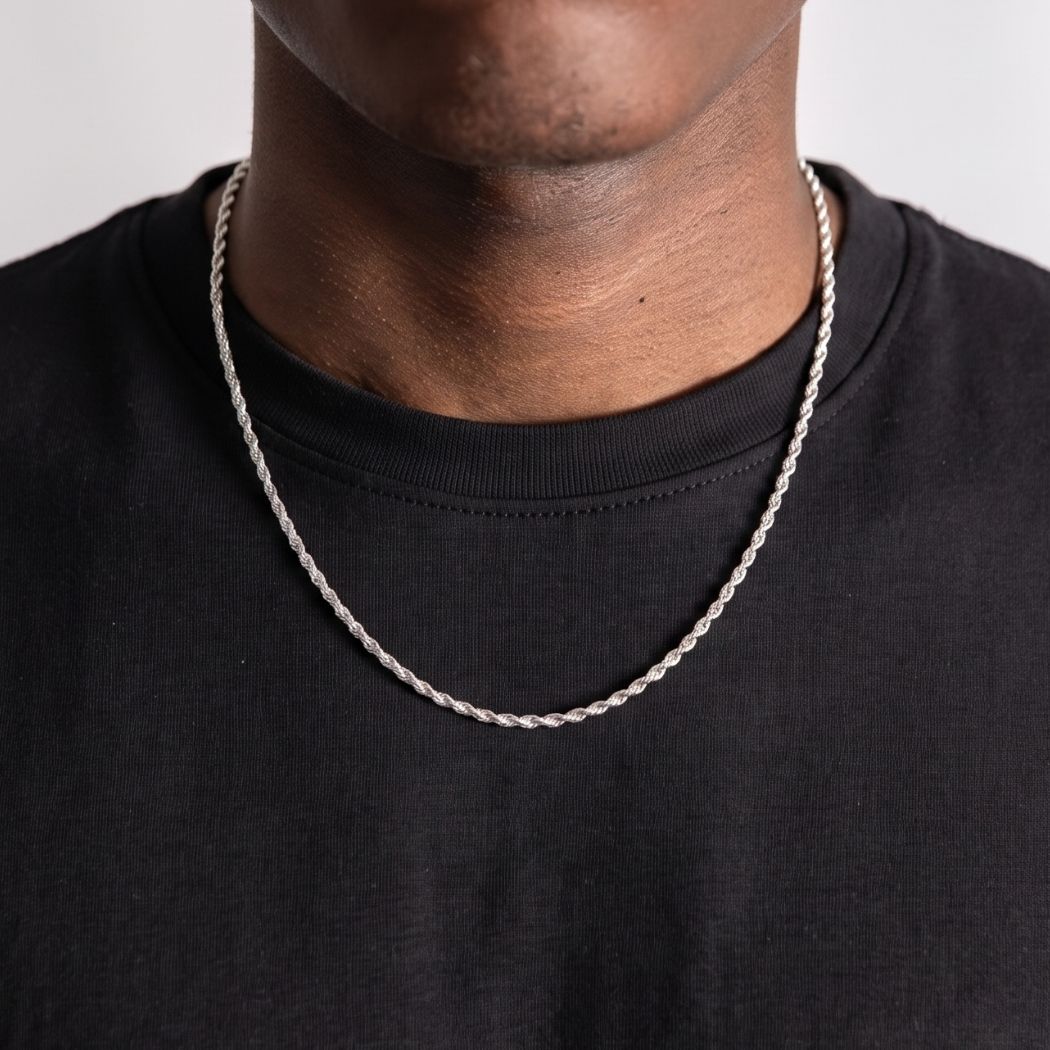
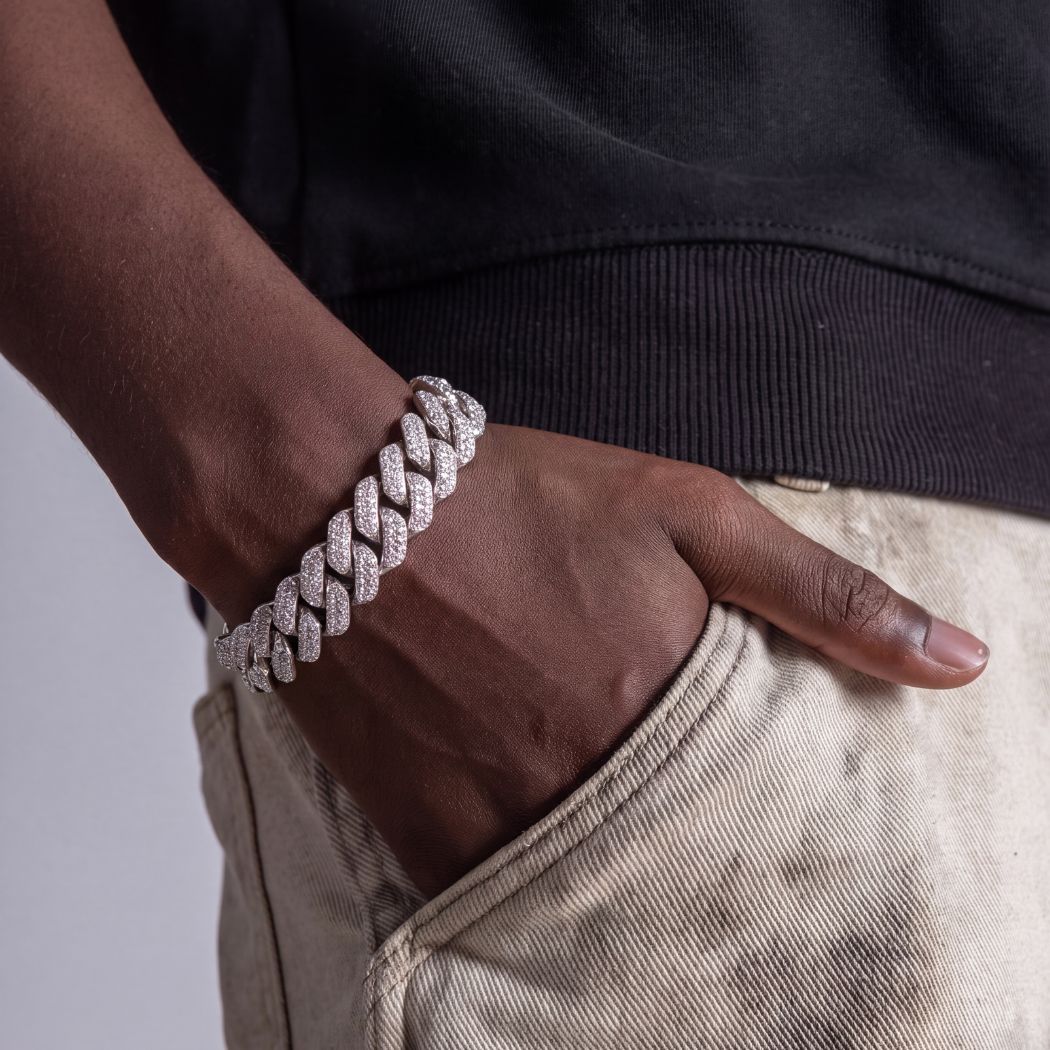
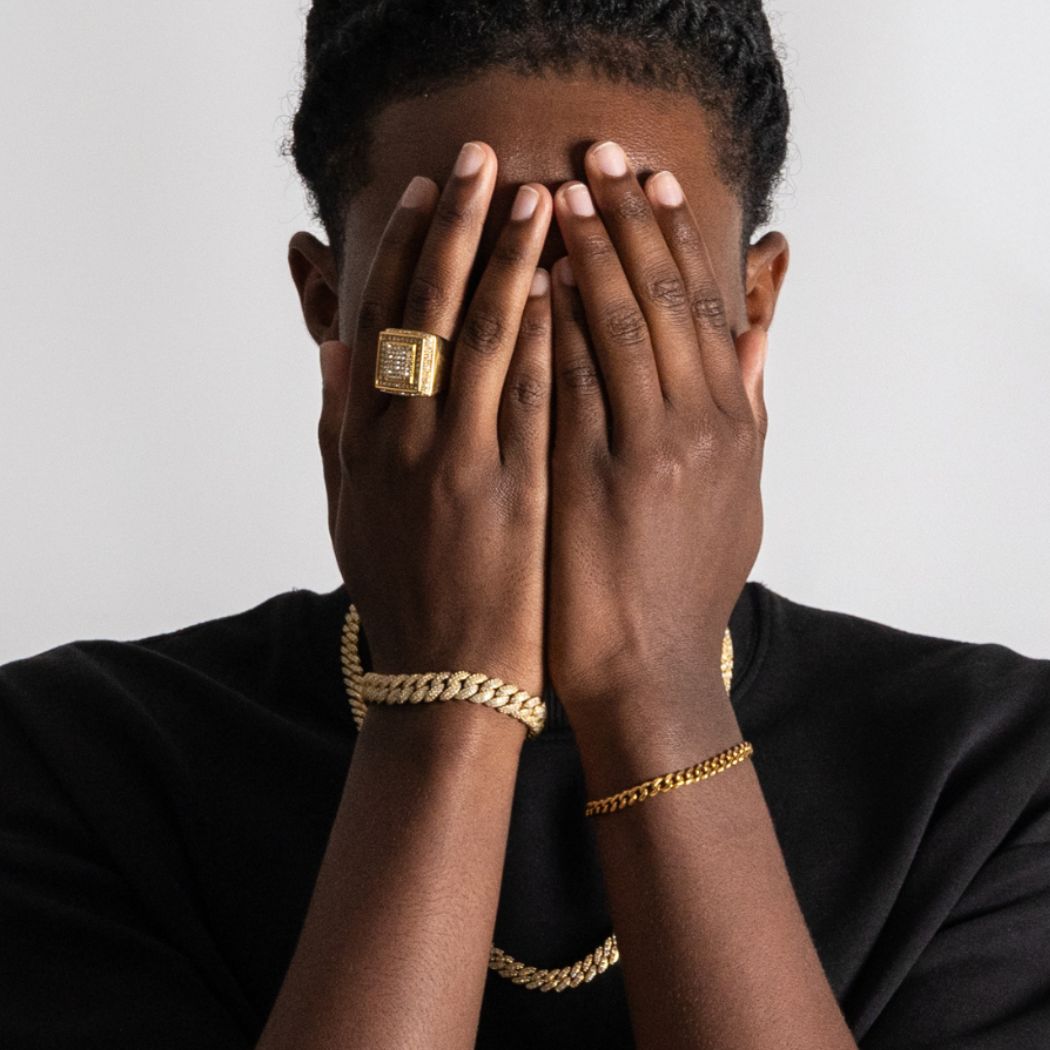
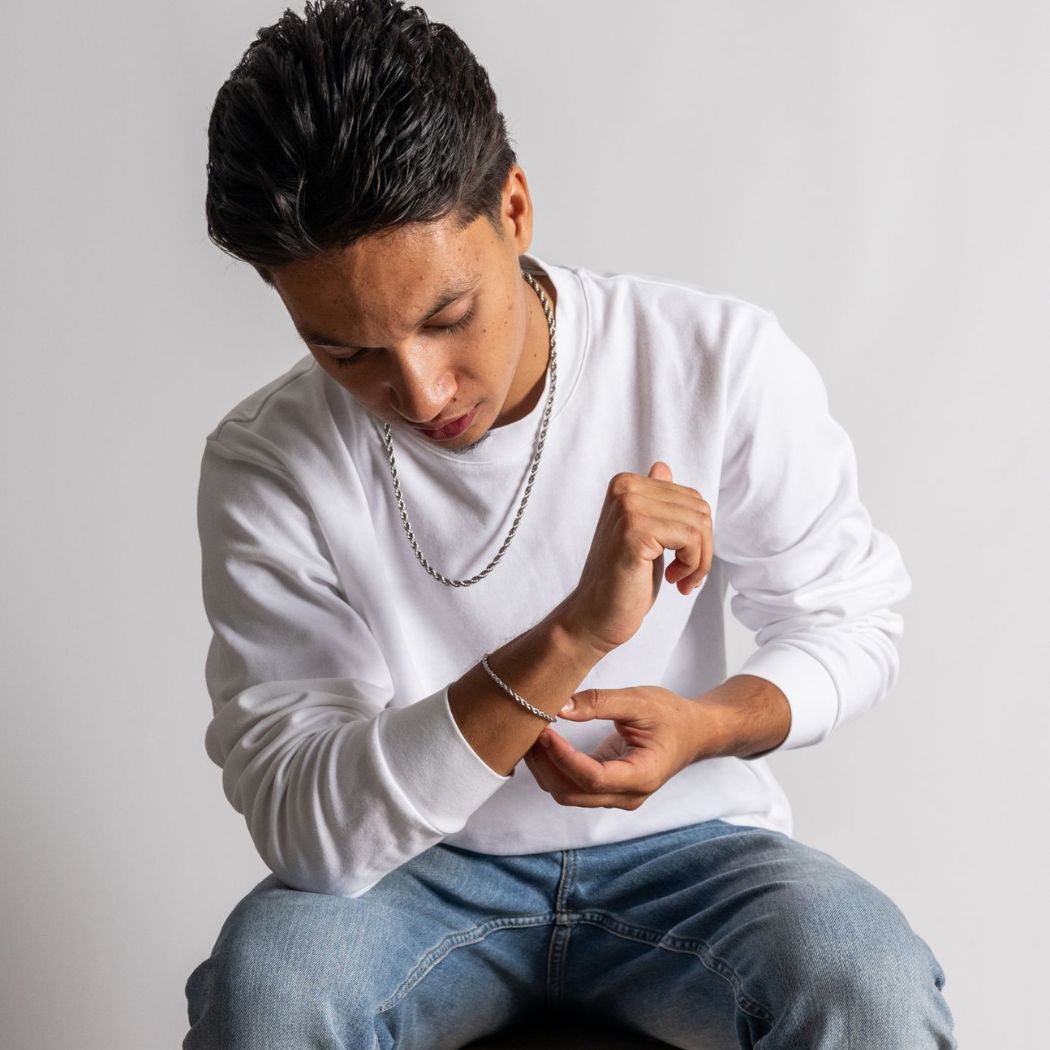
Iced out Cuban: zirconia on copper alloy or moissanite on 925 silver
Between 10 mm and 12 mm there are two millimeters. Between the two iced out Cubans in this store there is a lot more than that. One is VVS zirconia on a nickel free copper alloy with five layers of PVD. The other is VVS D moissanite on solid 925 sterling silver. Not two sizes of the same product, but two pieces of jewelry that happen to share a link shape.
How wide and how long you want it is covered in the length guide for the iced out Cuban. This article is about the step above that: what changes in the stone and in the base when you move from the 6, 8 or 10 mm to the 12 mm in 925 silver, and what that does to how the piece looks a year from now.

1. The two versions side by side
The iced out Cuban comes in 6, 8 and 10 mm and in 50, 55 and 60 cm (20in, 22in and 24in), with a lobster clasp, in silver tone and in gold tone. The base is a nickel free copper alloy carrying five layers of PVD. The stones are VVS zirconia.
The moissanite Cuban exists in exactly one width: 12 mm. Also 50, 55 and 60 cm (20, 22 and 24in), but with a box clasp with safety lock instead of a lobster, and only in silver. Not silver tone: solid 925 sterling silver, which is 92.5% silver with 7.5% copper through it, because pure silver is too soft to wear. The stones are VVS D moissanite.
Three things exist on one side only. Gold tone and every width under 12 mm only in the zirconia line, precious metal as a base only in the moissanite version. We do not carry a gold tone moissanite Cuban, and no 12 mm in copper alloy either.

2. The stone: 9.25 against 8 to 8.5
Moissanite is silicon carbide and scores 9.25 on the Mohs scale. Zirconia scores 8 to 8.5. That looks like little, but this is not about one stone.
A 10 mm Cuban carries dozens of small stones in rows across the full width of every link, and those links turn against each other with every movement. On a single stone a softened facet edge only shows when you go looking for it. In a continuous row you see it immediately, because the stone next to it serves as a reference two millimeters away.
The second number is the refractive index: 2.65 to 2.69 for moissanite, 2.15 to 2.18 for zirconia. The higher it is, the more light is bounced back inside the stone instead of leaking out through the bottom. On a wide link with a deep setting you notice that: the 12 mm keeps sparkling in dimmed light, while zirconia needs a direct light source. The full numbers comparison is in the guide on moissanite against zirconia and lab diamond.
The D in VVS D refers to color, the VVS to clarity, and on the moissanite line a GRA report records that. On zirconia, VVS stands for the same clarity class, but on its own scale for a different material. These are not interchangeable figures.
3. The base, and how it ages
This is the difference people underestimate, because on the day you unbox it you see nothing of it.
PVD stands for physical vapor deposition: the color is bonded to the metal at molecular level in a vacuum chamber, which is a good deal tougher than electroplating. But it stays a layer, and a layer has a thickness. On the iced out chains it wears through first where there is constant movement: the inside of the links and the hinge of the lobster clasp. The copper alloy underneath is also more sensitive to moisture than stainless steel, so sweat, chlorine and shower gel speed up exactly that.
On solid 925 silver nothing can wear through, because there is no layer: the outside is the same metal as the core. That does not mean nothing happens. Silver is softer and picks up scratches faster, and sulfur compounds in air and sweat form a dark tarnish. The difference is that tarnish is reversible and worn through plating is not. A silver polishing cloth takes the tarnish off; a bare patch in a PVD layer does not come back.
And where this stops: neither one is an investment. Buy it because you wear it.

4. When 12 mm is too much
A 12 mm Cuban is not simply the largest size in the range. It makes two demands on the wearer.
The first is the neck. Below a neck circumference of roughly 38 cm (15in), a 12 mm link worn short runs almost from jawline to collarbone, and then you see the chain before you see the person. At 60 cm (24in) it gets room, but there is weight sitting on your breastbone.
The second is clothing. A 12 mm link needs a flat surface to read against: a plain T-shirt, a black sweater, an open shirt. Over a striped shirt or a buttoned collar it loses its line, and under a blazer it no longer sits flat. The 6 mm goes everywhere with you, and that is exactly its job.
Where each length lands on your build, and how to measure without guessing, is set out in the length guide and the chain size chart. Short version: pick the width first, the length after.
5. The bracelet with it, and why the sizes do not line up
Both lines have a matching bracelet, but they do not share sizing.
The iced out Cuban bracelet follows the chain: 6, 8 and 10 mm, in 18, 20 and 22 cm (7.1, 7.9 and 8.7in), also in gold tone. The moissanite Cuban bracelet is 12 mm and comes in 19 and 22 cm (7.5 and 8.7in). No 18, no 20. That is not an omission: a 12 mm link is so tall that it will not sit neatly around the curve of the wrist at short in between sizes.
Measure your wrist and add about 1.5 cm. If you land between 19 and 22 cm (7.5 and 8.7in), take 19 for a close fit and 22 if it should be able to turn. A wide link that sits too loose ends up with the box clasp on top of your wrist.
If you want the chain and the bracelet as one set, keep the width the same or go one step narrower on the wrist. The full overview is in the Cuban link collection.

6. Care differs per version
True for both: the dirt sits between the links and under the setting, not on the stone. That is where the light enters. Lukewarm water, mild soap and a soft toothbrush along the underside fix most dull chains. Then pat dry, because water stays behind in the clasp.
For the copper alloy with PVD there is more: keep it out of the shower, out of chlorinated water and away from the gym, because moisture and sweat attack the spots where the layer is thinnest. No ultrasonic bath and no silver polish, because polish is an abrasive.
On solid 925 silver it works the other way around: tarnish comes with the metal and can be removed. Work a silver polishing cloth along the metal, between the rows, not across the stones. Store it in a sealed pouch, because tarnishing runs faster in open air. More on this line at the 925 sterling silver jewelry and the moissanite collection.

Four mistakes you notice immediately
- Choosing the 12 mm because it is the biggest. Width is not a ranking. Below a neck circumference of roughly 38 cm (15in), 8 mm usually does what you meant.
- Treating plated copper like silver. A polishing cloth or polishing paste grinds the PVD layer thinner. Water with mild soap is the only right thing there.
- Putting the moissanite chain away because it went darker. That is tarnish on 925 silver and it is reversible.
- Chain and bracelet far apart in width. Keep them equal or go one step narrower on the wrist. More difference looks like an accident.
Where do you start?
Looking for gold or silver tone and planning to wear it often? Then the iced out Cuban in 8 mm at 55 cm (22in) is where most people land, with the 8 mm bracelet in 20 cm (7.9in) alongside it.
Want precious metal under the stones and the hardest stone we carry? Then the moissanite Cuban in 12 mm at 55 or 60 cm (22in or 24in) is the step above, with the 12 mm bracelet in 19 or 22 cm (7.5 or 8.7in).
Looking wider is an option too: the iced out collection runs on into rings and pendants, and the iced out chains put every width side by side.
Frequently asked questions
What is the difference between the iced out Cuban and the moissanite Cuban?
The stone and the base. The iced out Cuban has VVS zirconia on a nickel free copper alloy with five layers of PVD and comes in 6, 8 and 10 mm. The moissanite Cuban has VVS D moissanite on solid 925 sterling silver and exists only in 12 mm.
Is moissanite harder than zirconia?
Yes. Moissanite scores 9.25 on the Mohs scale, zirconia 8 to 8.5. On a Cuban with dozens of stones side by side that counts for more than on a single stone, because you compare a softened facet edge directly with the stone next to it.
What lengths and widths are there?
The iced out Cuban comes in 6, 8 and 10 mm in 50, 55 and 60 cm (20in, 22in and 24in). The moissanite Cuban is 12 mm in 50, 55 and 60 cm (20, 22 and 24in). The matching bracelets are 18, 20 and 22 cm (7.1, 7.9 and 8.7in) for the iced out line and 19 and 22 cm (7.5 and 8.7in) for the moissanite line.
Can the iced out Cuban go in the shower?
Better not. The base is a copper alloy and that is more sensitive to moisture than stainless steel. Sweat, chlorine and shower gel attack exactly the spots where the PVD layer is thinnest, such as the hinge of the clasp.
Why is my 925 silver chain going darker?
That is tarnish from sulfur compounds in air and sweat, and it is reversible. Use a silver polishing cloth and work along the metal between the rows, not across the stones. Storing it in a sealed pouch slows it down.
Does the moissanite Cuban also come in gold tone or narrower than 12 mm?
No. We carry the moissanite Cuban only in 12 mm and only on solid 925 sterling silver. Gold tone and the narrower widths of 6, 8 and 10 mm exist only in the zirconia line on copper alloy.