
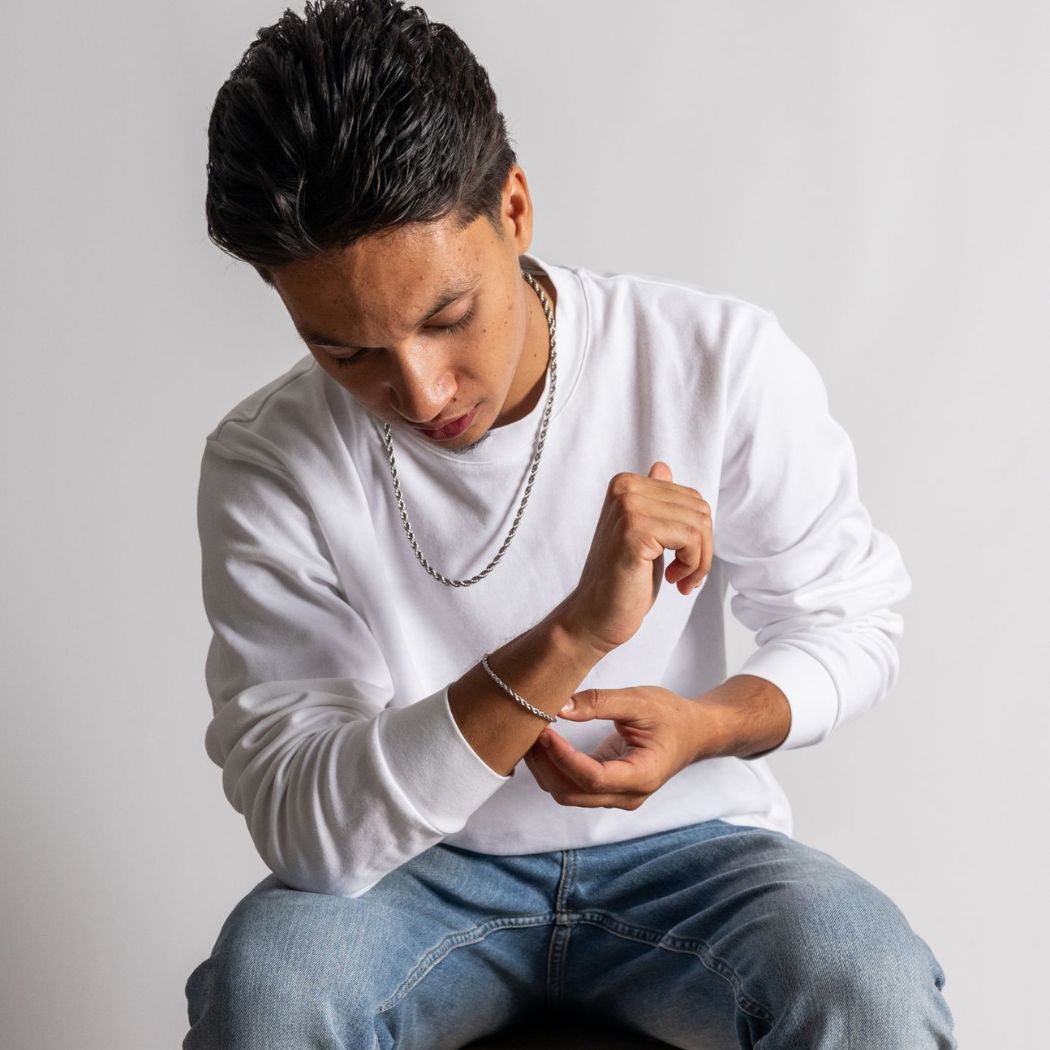
Article: Moissanite, cubic zirconia or lab diamond: which tennis chain?
Moissanite, cubic zirconia or lab diamond: which tennis chain?
The comparison you read everywhere is moissanite against lab grown diamond. With a tennis chain that is rarely the choice you actually make. We carry the same 5 mm tennis shape in two builds, and those are the two that end up side by side on the table.
One is moissanite on solid 925 sterling silver. The other is VVS cubic zirconia on a nickel free copper alloy with five layers of PVD. This guide puts the three numbers that decide it next to each other, explains why hardness matters more in a row of dozens of stones than in a single one, and says what the GRA certificate does and does not tell you.

1. Two builds of the same shape
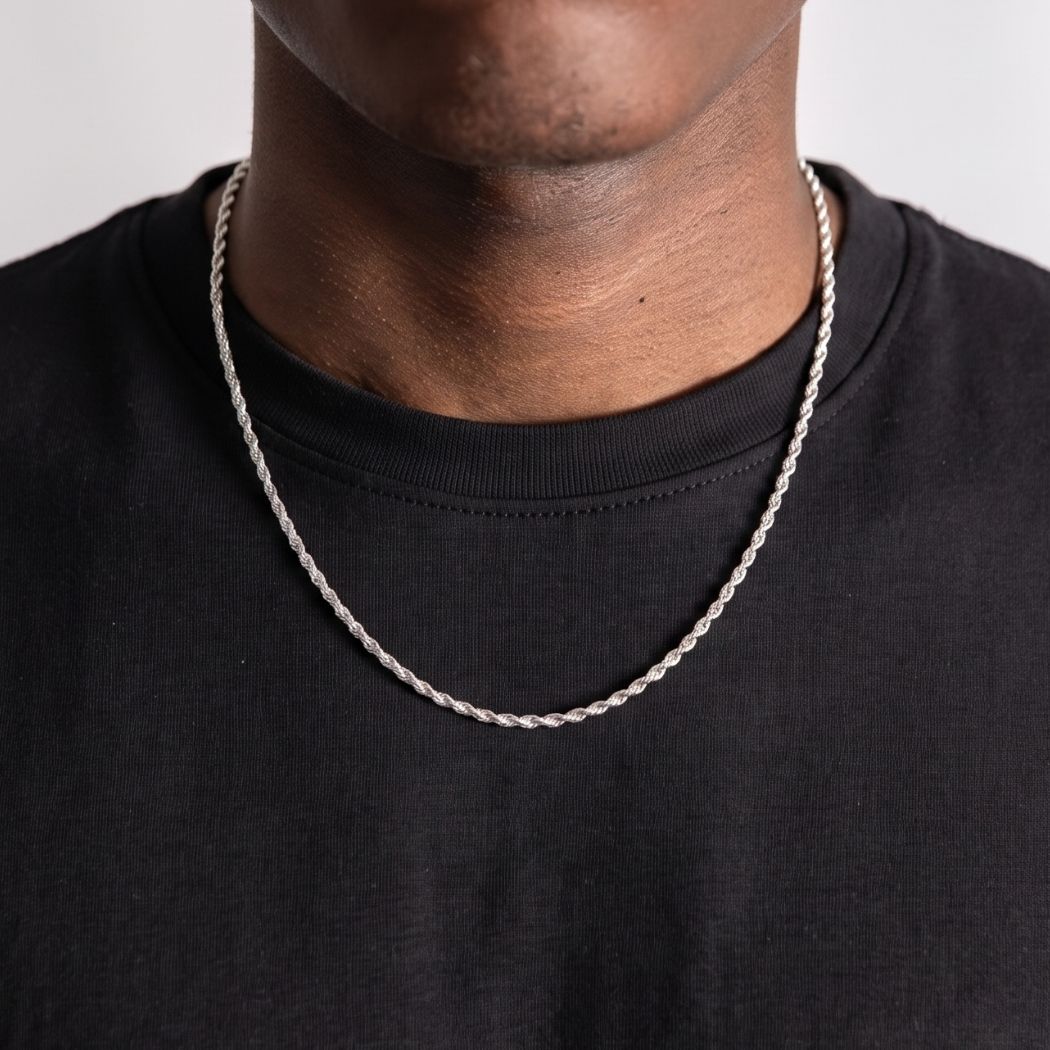
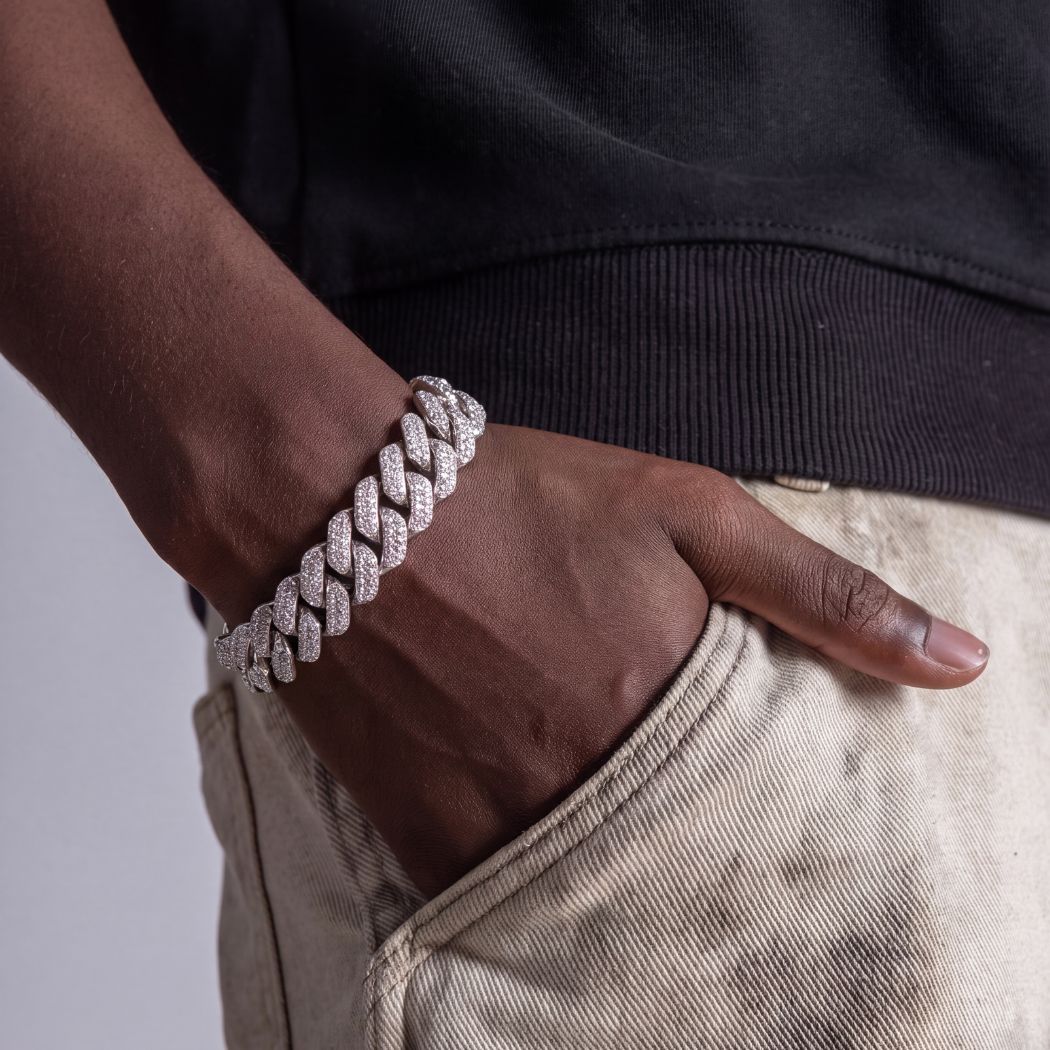
The moissanite tennis chain is 5 mm wide, runs in 50 cm (20in), 55 cm (22in) and 60 cm (24in) and closes with a box clasp. The base is solid 925 sterling silver, the stones are VVS D moissanite and a GRA certificate is included. The matching bracelet is the same 5 mm in 18 and 20 cm (7.1 and 7.9in).
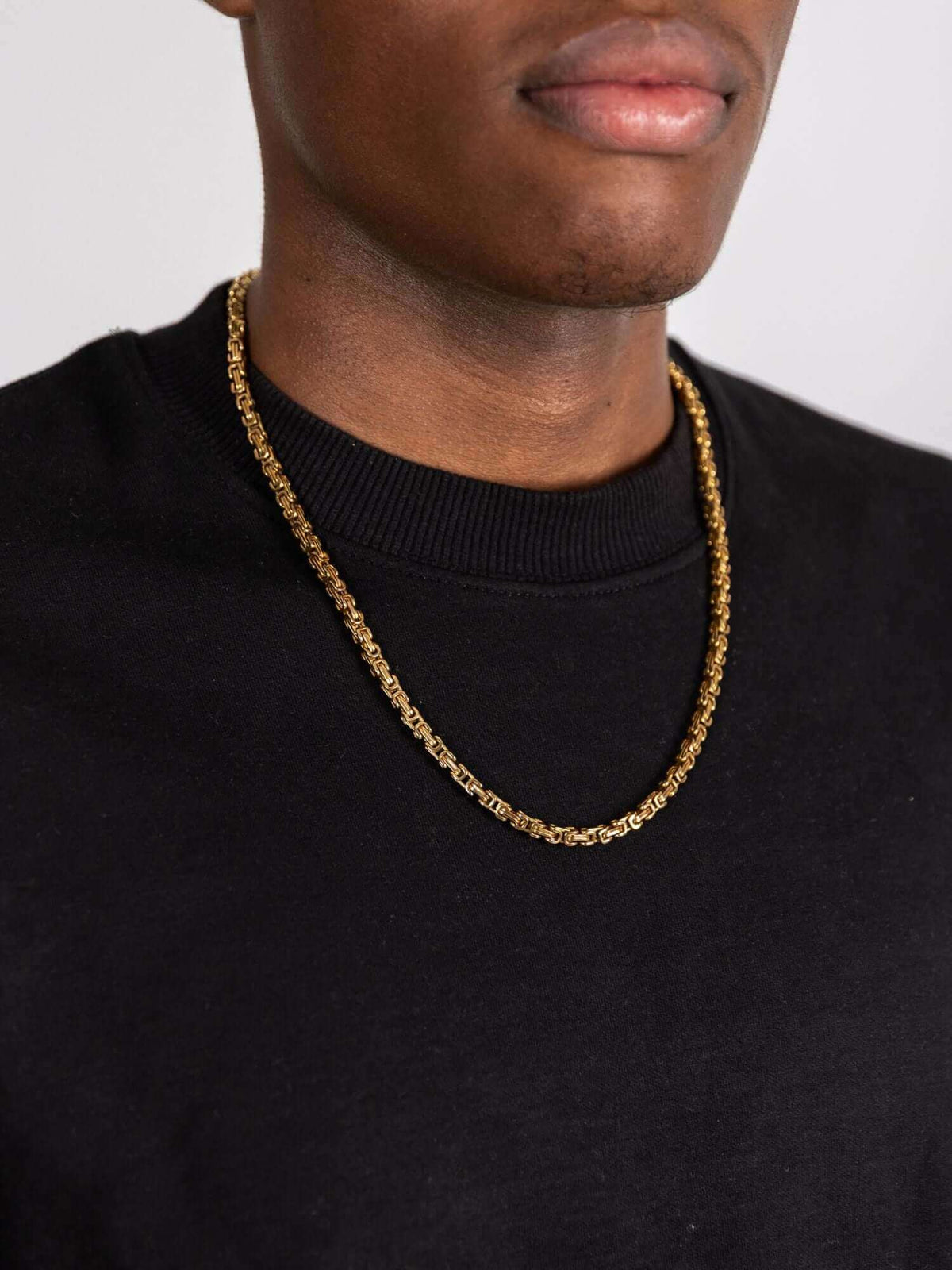
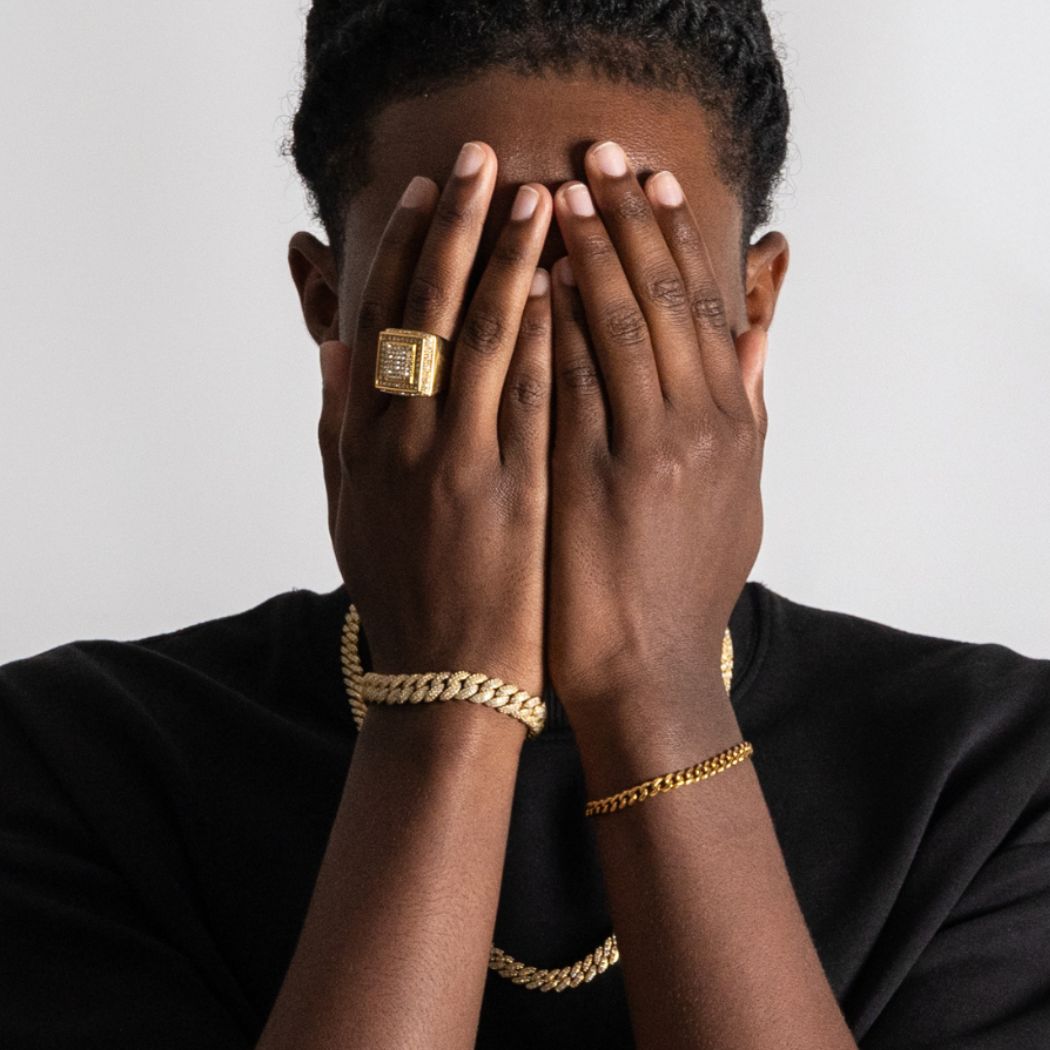
The cubic zirconia tennis chain has the same lengths and the same box clasp, but comes in 3 mm as well as 5 mm and in gold tone alongside silver tone. Its base is a nickel free copper alloy with five layers of PVD, where the color is bonded to the metal at molecular level in a vacuum chamber instead of being electroplated. The bracelet again runs in 18 and 20 cm (7.1 and 7.9in), also in gold tone.
Two differences stand out straight away: 3 mm exists only in the cubic zirconia line, and so does gold tone. We carry moissanite in 5 mm only and on silver only.

2. Three numbers, and what they do not say
Hardness. Moissanite scores 9.25 on the Mohs scale, cubic zirconia 8 to 8.5 and diamond 10. That gap of roughly one point decides whether the facet edges are still sharp after a year of wear.
Refractive index. Moissanite comes in at 2.65 to 2.69, cubic zirconia at 2.15 to 2.18 and diamond at 2.42. The higher this number, the more light is thrown back inside the stone instead of leaking out of the back. This is where moissanite wins most clearly.
Dispersion. Moissanite reaches 0.104, cubic zirconia 0.060 and diamond 0.044. Dispersion is the splitting of white light into colors, in other words the rainbow flash you see when the piece moves.
Note what that last number also says: at 0.060 cubic zirconia already sits above diamond. The claim that moissanite has more fire than a diamond is true, but it holds just as well for the cheaper stone. So fire is not where the real difference lies. That is hardness and refractive index.
3. Why a row wears differently than a single stone
A ring holds one stone. A 55 cm (22in) tennis chain holds dozens, all at the same height and all in view at once. That changes what hardness means.
On a single stone you only notice a softened facet edge if you go looking for it. In a continuous row you see it immediately, because the neighbors give you a reference two centimeters away. As soon as part of the row goes dull, the whole thing loses its line, and that is what people mean when they say a tennis chain started to look cheap after a year.
On a wrist this weighs even heavier than on a neck. Your hand meets table edges, keyboards, a steering wheel and door handles all day. A tennis bracelet therefore takes many times the contact a chain takes. If you go for the harder stone in one place, go for it there.
4. 925 silver or copper alloy with PVD
This is the second half of the choice, and unlike the stones there is no clear winner here.
Solid 925 sterling silver is 92.5% pure silver with copper added for strength. There is no layer around it that can wear through: what you see is the metal itself. That means material value, and it means a jeweler can polish or repair it. Silver is softer than the PVD finish, so you will pick up fine marks sooner, and it can darken over time between the settings.
The copper alloy with five layers of PVD is the other side. The finish is harder than silver and it costs considerably less, but it is a finish: wear it through in one spot and the alloy underneath comes up. Copper alloy is also more sensitive to moisture than stainless steel, so this build does not belong in the gym or the pool.
Short version: if you want maximum hardness on the outside for a night out, take the cubic zirconia build. If you want a precious metal you can still have refinished in ten years, take the silver.

5. Lab diamond: what we do and do not carry
A lab grown diamond is a real diamond. Same chemical structure, same 10 on Mohs, only grown in a reactor instead of mined. It is not an imitation and it is not moissanite.
We do not carry a tennis chain in lab diamond. Our lab grown diamond collection currently consists of two pairs of 14K pave earrings, and that is deliberate: across a continuous row of dozens of stones the price gap with moissanite runs up so far that the piece lands in a different category than this shop is built for.
If you carry on comparing elsewhere, watch one thing that often gets left out. Moissanite does not hold its value, and neither does cubic zirconia. There is no second hand market for either. In our moissanite set the silver is the only part with material value. Anyone buying jewelry as an investment should buy something else. Anyone buying it to wear is in the right place.
6. What the GRA certificate does and does not say
The moissanite chain comes with a GRA certificate. It records that the stones are moissanite and what grade they carry: VVS for clarity, D for color.
D is the highest color grade there is, meaning completely colorless, without the yellow or gray undertone cheaper stones often have. VVS stands for very very slightly included, inclusions that are hard to find even under a loupe. On a tennis chain the first of those matters most: one stone with an off tint stands out immediately in a continuous row, because you see it right next to dozens of others.
And what it is not: it is not a diamond certificate, and it does not pretend to be. Moissanite is silicon carbide, a gemstone in its own right, not a diamond and not a fake one. What the certificate is for is having on paper what you are buying instead of taking a sales story at face value.

7. Which length and which size
For the chain: at 50 cm (20in) it stays inside a buttoned shirt, 55 cm (22in) falls on the top of the breastbone and is our best-selling size, and at 60 cm (24in) it sits free above a T-shirt. Wearing two chains, keep about 10 cm between them or they will slide over each other.
For the bracelet: measure your wrist and add about 1.5 cm. Under a 17 cm (6.7in) wrist you need 18 cm (7.1in), above it 20 cm (7.9in). A tennis bracelet should sit a little looser than a link bracelet, so it can turn and the stones keep catching a new angle. Worn tight, the same row stays facing up and you lose half the effect.
Too loose is a real problem here, and it is the detail most guides skip: the box clasp then rotates to the top of your wrist and you spend the day looking at the clasp instead of the stones.
Not sure? Use the size chart for chains or the size chart for bracelets.

8. Care: it is grease, not wear
When the stones look dull it is almost never the stone. Moissanite attracts grease, and hand cream and soap collect under the setting. That is exactly where the light enters, so a thin film there costs more sparkle than a scratch on top.
Lukewarm water, a drop of mild soap and a soft toothbrush along the underside of the setting take it off. Dry thoroughly with a soft cloth afterwards. If the silver darkens between the settings over time, a silver cloth brings it back. Do not use an ultrasonic bath and do not use abrasives.
The cubic zirconia build on copper alloy adds one rule: put on perfume, deodorant and hand cream before you put the piece on, let it dry, and store it dry.
Four mistakes you can spot instantly
- Wearing a tennis bracelet too tight. The same row then stays facing up and half the effect disappears.
- Taking the copper alloy into the shower or the gym. The alloy is more sensitive to moisture than stainless steel, and the clasp is where you notice it.
- Two chains at almost the same length. Without about 10 cm between them they slide over each other and the row of stones vanishes behind the second chain.
- Buying moissanite as an investment. Buy it to wear. Only the 925 silver carries material value.
Where do you start?
Wearing it daily and want precious metal? The 5 mm moissanite tennis chain at 55 cm (22in), with the 5 mm bracelet alongside if you want the set complete.
After gold tone, a narrower 3 mm or a lower entry point? Then the gold tennis chain or the silver tennis bracelet with VVS cubic zirconia is the logical step.
Want to look further: the tennis collection has everything in one place, the moissanite collection runs on into rings and earrings such as the moissanite tennis ring, and if you want more volume the iced out collection with the tennis cluster chain at 10 or 12 mm is the wider end of the same style.
Frequently asked questions
Is moissanite better than cubic zirconia?
On hardness and refractive index, yes. Moissanite scores 9.25 on Mohs against 8 to 8.5 for cubic zirconia, and the refractive index is 2.65 to 2.69 against 2.15 to 2.18. On fire the gap is smaller than usually suggested: 0.104 against 0.060.
Does moissanite have more fire than diamond?
Yes, 0.104 against 0.044. But cubic zirconia at 0.060 also sits above diamond, so fire alone is not a good reason to choose moissanite. Hardness and refractive index are.
What does a GRA certificate say?
It records that the stones are moissanite and what grade they carry, on our chain VVS for clarity and D for color. It is not a diamond certificate, because moissanite is silicon carbide and a gemstone in its own right.
Does Carpe Ice sell a lab diamond tennis chain?
No. Our lab grown diamond collection consists of two pairs of 14K pave earrings. For a continuous row of dozens of stones we carry moissanite on 925 silver and cubic zirconia on copper alloy with PVD.
Which tennis bracelet size do I need?
Measure your wrist and add about 1.5 cm. Under a 17 cm (6.7in) wrist you need 18 cm (7.1in), above it 20 cm (7.9in). It should be able to turn slightly, but not so loose that the box clasp ends up on top of your wrist.
Why do my moissanite stones look dull?
Almost always grease and soap residue under the setting, because that is where the light enters. Lukewarm water, mild soap and a soft toothbrush along the underside solve it. Do not use an ultrasonic bath.