
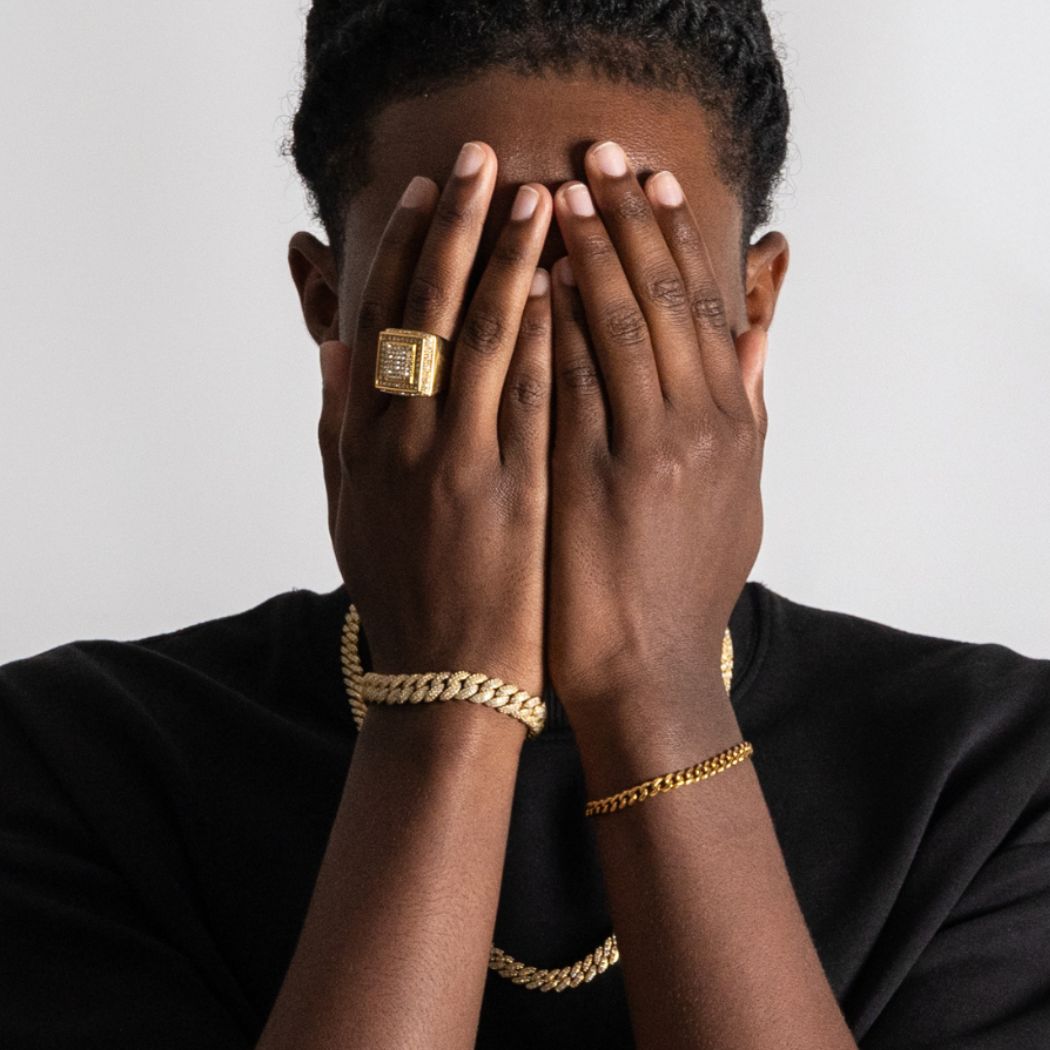

How to style a tennis chain: width, length and layering
Most styling advice for a tennis chain does not work, and that comes down to one property nobody mentions. A tennis chain is not a link, it is a row. There is no pattern in it for the eye to read, only one continuous line of light.
That changes everything about what you can wear it with. This guide covers the four widths we stock, where each length sits on the body, and the one rule that decides whether layering works or fails.

1. Four widths, four different things
We stock the tennis shape in 3, 5, 10 and 12 mm. Those are not four sizes of the same piece of jewelry, they are four different effects.
3 mm looks like a line from a meter away, not like separate stones. This is the width that disappears under a shirt and the one you can wear alongside a second chain.
5 mm is the width at which you start to see the individual stones. From here the chain becomes a piece in its own right instead of an accent.
10 and 12 mm are the cluster versions, where every setting holds several stones instead of one. That turns it into a band rather than a row, and you wear that on its own.
Not sure? 5 mm is the width most people go for, in silver color and gold color.

2. Why you do not pair a tennis chain with another tennis chain
With a link chain there is something to look at: the shape of the link, the way it interlocks, the way the pattern repeats. Put two different links side by side and you see two patterns.
With two tennis chains you see none of that. You see two rows of light that read together as one wider row, and you could have had that wider row for less by buying a wider chain in the first place. This is exactly the mistake most styling guides recommend.
There is one exception, and it is measurable. If the difference in width is big enough, they stay two things. A 3 mm next to a 12 mm cluster works, because that is a factor of four. A 3 mm next to a 5 mm does not, because it looks like one chain that changed its mind halfway.
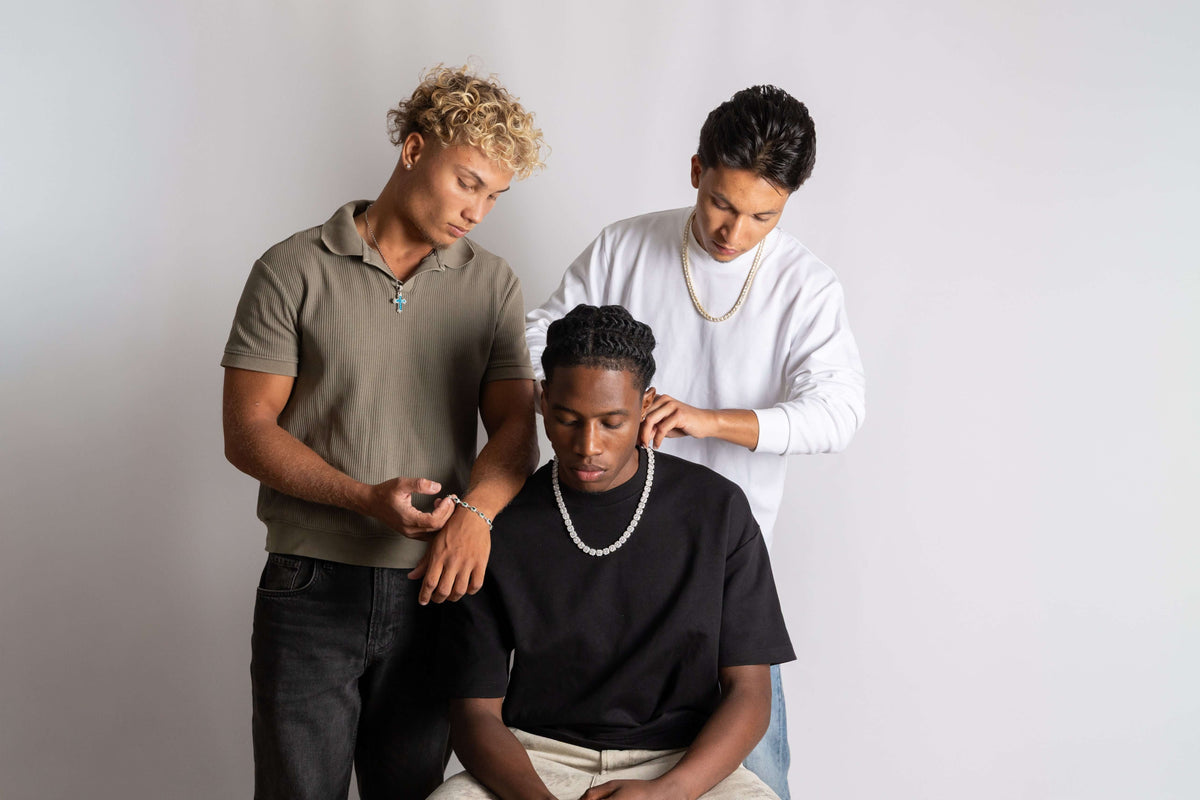
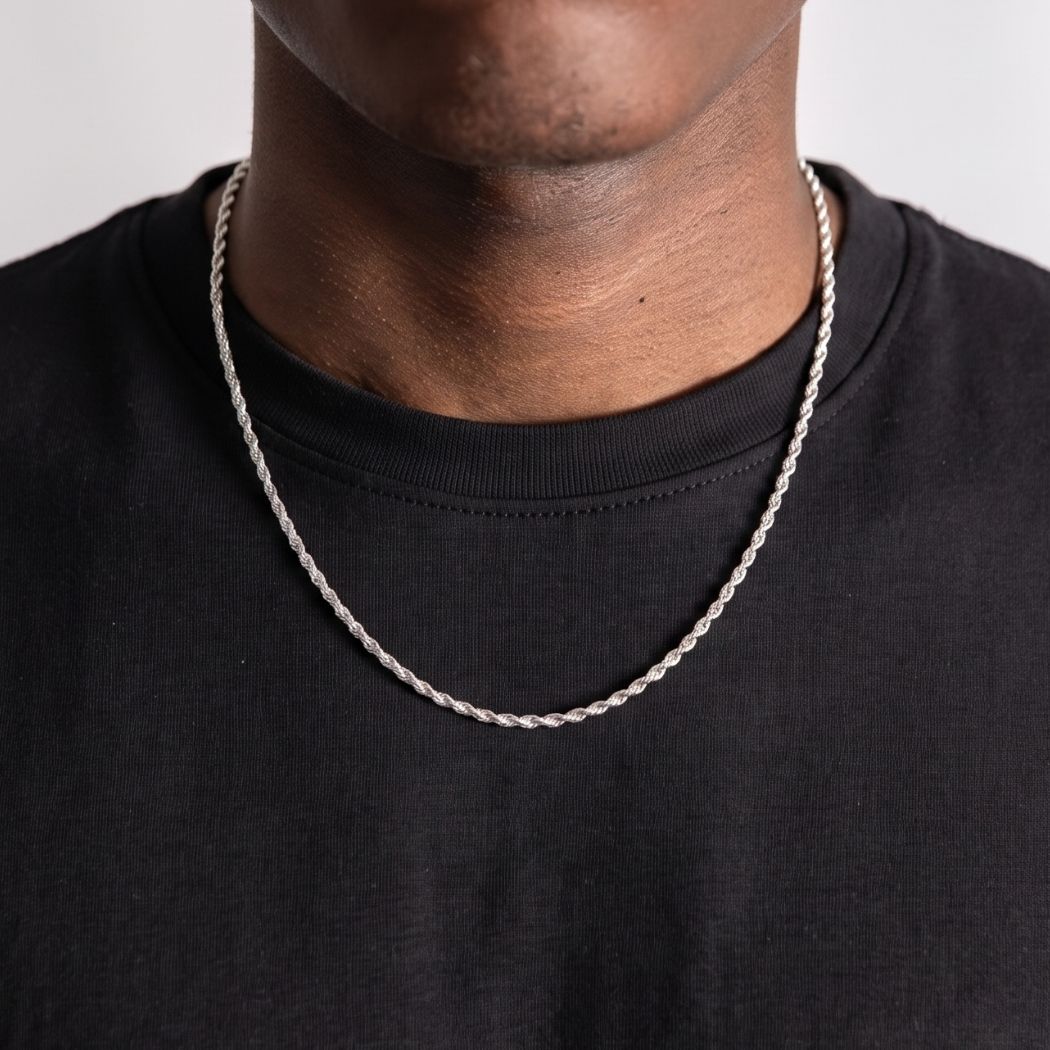
If you want to layer, pair the tennis with a link that does have a shape of its own, such as a cuban link. The contrast between a smooth row of stones and a wide flat link does the work that two rows of stones never will.
3. The 10 cm rule
If you wear two chains, keep roughly 10 cm between them in length. With any less they slide over each other the moment you move, and then you never see the full line of either one.
Our tennis chains run in 50 cm (20in), 55 cm (22in) and 60 cm (24in), so within our own line 50 with 60 is the only pairing that clears the rule. For a third layer you need a chain from outside the tennis line.
Where each length falls:
- 50 cm (20in) stays inside a buttoned shirt and falls just below the collarbone.
- 55 cm (22in) falls on the top of the breastbone. This is our best-selling length and it looks best over a T-shirt.
- 60 cm (24in) hangs free on the chest and is at its strongest with oversized clothing.
The cluster necklace comes in 50 and 55 cm (20 and 22in) only, because at that width 60 cm (24in) puts more weight on the neck than is comfortable.
4. Chain and bracelet: same width, or deliberately not
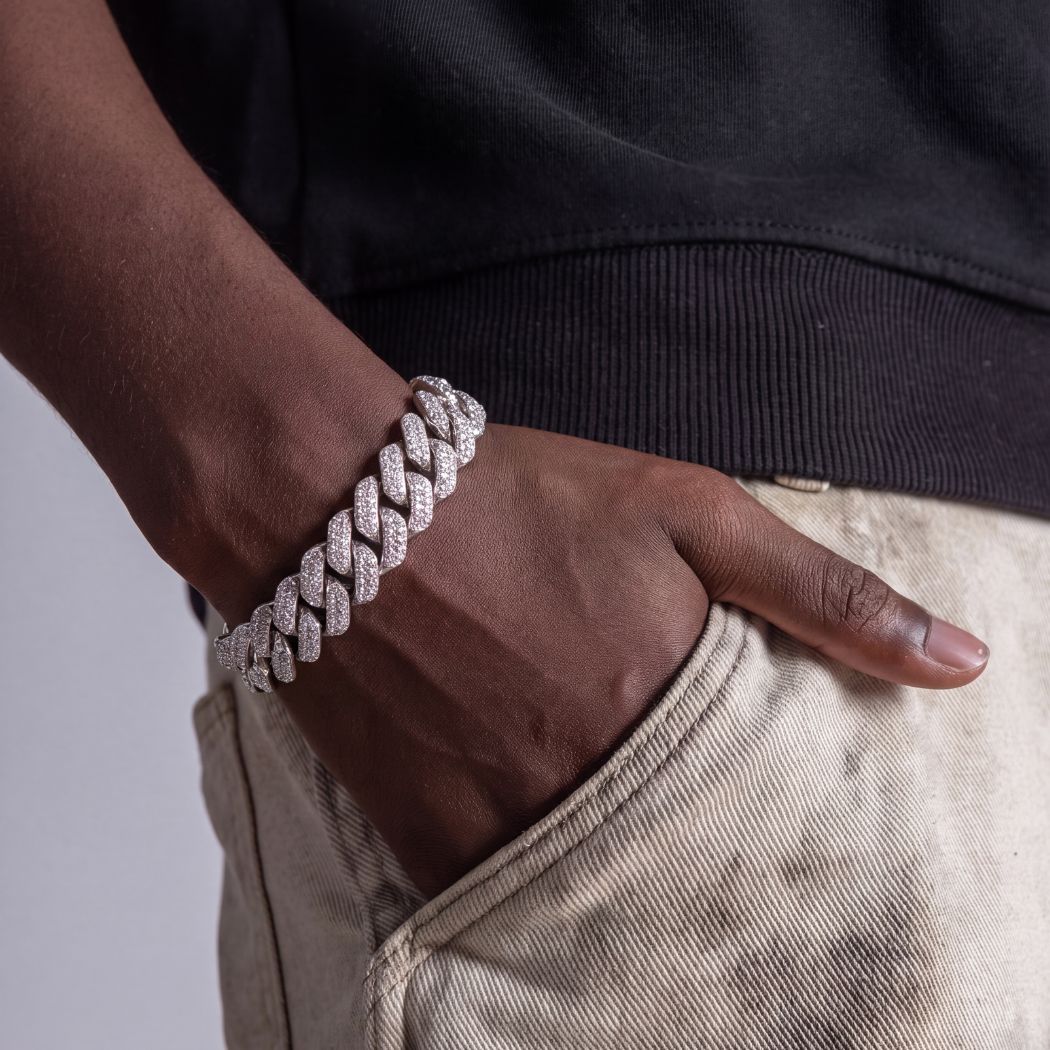
The tennis bracelet comes in the same 3 and 5 mm, in 18 and 20 cm (7.1 and 7.9in), and in gold color as well. The cluster bracelet comes in 10 and 12 mm, in 18 and 21 cm (7.1 and 8.3in).
Choose the same width for both and it looks like a set. Choose different widths, say 3 mm at the neck and 5 mm at the wrist, and it looks like two separate choices that happen to suit each other. Both work, but halfway between does not: 5 mm and 5 mm in two different colors is the combination that looks unintentional.
For bracelet size, measure your wrist and add roughly 1.5 cm. Under a 17 cm (6.7in) wrist you need 18 cm (7.1in), above that 20 cm (7.9in). A tennis bracelet may sit a little looser than a link bracelet, so that it can turn on your wrist and the stones keep catching a different angle.
Not sure? Use the size chart for chains or the size chart for bracelets.

5. Wearing gold and silver together
You can, but not fifty fifty. Two metals in equal measure look like an accident. One metal clearly in the majority with a single piece in the other color looks like a choice.
In practice: if you are wearing three pieces, keep two of them the same color. With two pieces it is harder, because there is no majority and all anyone sees is the difference. A gold tennis chain with a silver watch does get away with it, because the distance between neck and wrist is wide enough.
The exception is the moissanite tennis necklace in 925 silver. It is so bright that next to gold it looks white rather than silver, and then the contrast looks intended instead of accidental.
6. When you are better off taking it off
Almost no styling guide covers this, and it is the difference between a chain that lasts two years and one that has gone dull after six months.
The tennis chains and bracelets set with cubic zirconia are built on a nickel free copper alloy, with five layers of PVD for the color. That finish is hard, but copper alloy is more sensitive to moisture than stainless steel. So: not into the shower, not into the pool, and not to the gym.
Put on perfume, deodorant and body lotion before the jewelry goes on, and let them dry. The chain goes on last, after your clothes and your hair.
If you want a version that can take more, the moissanite tennis bracelet in solid 925 silver has no finish that can wear away and can stay on in the shower. Take it off before the pool. The difference between the two builds is set out in the comparison of moissanite, cubic zirconia and lab diamonds.

7. Care: under the setting, not on top of it
A tennis chain that looks dull is almost never worn out. What happens is that grease and traces of soap gather under the setting, and that is exactly where the light enters the stone. A thin film in that spot costs more sparkle than a scratch on the top.
A dry soft toothbrush along the underside of the settings takes most of it away. On the moissanite version in silver you can add lukewarm water with a drop of mild soap, followed by thorough drying with a soft cloth.
Store the piece dry and on its own, so the stones cannot rub against your other jewelry.

Four mistakes anyone can spot
- Two tennis chains of 3 and 5 mm together. The difference in width is too small, so it looks like one chain that changes halfway.
- Two chains at almost the same length. Without roughly 10 cm between them they slide over each other.
- Taking the cubic zirconia version to the gym. Copper alloy is more sensitive to moisture than steel, and the clasp is where you notice it first.
- Gold and silver at exactly fifty fifty. Without a clear majority in one color it looks like chance instead of a choice.
Where do you start?
One piece, to wear every day? The 5 mm tennis chain at 55 cm (22in), in silver color or gold color. That is the combination that works over a T-shirt and under a shirt alike.
Want to be able to wear it next to something else? Take the 3 mm and keep the second chain at least 10 cm longer.
Want one piece that stands out instead? The cluster necklace in 10 or 12 mm at 55 cm (22in), worn on its own. To look further, there is the tennis collection, all our necklaces and the iced out collection.
Frequently asked questions
Can you wear two tennis chains together?
Only if the difference in width is big enough. A 3 mm next to a 12 mm cluster stays two things, while a 3 mm next to a 5 mm looks like one chain that changes halfway. Leave roughly 10 cm between them in length as well.
Which tennis chain width do most people choose?
5 mm. At that width you start to see the individual stones and the chain becomes a piece in its own right. At 3 mm it looks like a line from a distance, at 10 and 12 mm like a band.
Which tennis chain length should I choose?
55 cm (22in) falls on the top of the breastbone and is chosen most often. At 50 cm (20in) the chain stays inside a buttoned shirt, at 60 cm (24in) it hangs free on the chest. The cluster version comes in 50 and 55 cm (20 and 22in) only.
Which tennis bracelet size do I need?
Measure your wrist and add roughly 1.5 cm. Under a 17 cm (6.7in) wrist you need 18 cm (7.1in), above it 20 cm (7.9in). It may sit slightly looser than a link bracelet so that it can turn on your wrist.
Can a tennis chain go in the shower?
The cubic zirconia version cannot. It is built on a copper alloy, and that is more sensitive to moisture than stainless steel. Take it off before showering, swimming and working out.
Can you wear gold and silver together?
Yes, but not in equal measure. Let one metal clearly take the majority and add a single piece in the other color. Fifty fifty looks like chance rather than a choice.