

How to Clean Silver Jewelry: What Works and What Ruins It
Blackened silver is not wear and it is not a fault in the piece. It is a layer of silver sulfide a few thousandths of a millimeter thick, and hot water, baking soda and a sheet of aluminum foil take it off in two minutes. No polishing, no scrubbing.
Those same two minutes on an iced out bracelet or a plated piece leave damage that never comes back. This guide is about that difference: what exactly you are holding, which method belongs to it, and which home remedies destroy more than they clean.

1. Why 925 silver turns black, and why that proves it is real
925 sterling silver is 92.5% pure silver and 7.5% other metals, almost always copper. Pure silver is too soft to wear: a chain of 100% silver deforms in your hand. The copper gives it strength, and the copper is also why something changes over time.
Silver does not rust. It reacts with sulfur. Hydrogen sulfide is present in small amounts in ordinary air, and more comes from exhaust fumes, a gas stove, eggs, onions, wool, rubber and your own sweat, which contains sulfur-bearing amino acids. Silver plus sulfur becomes silver sulfide, and that is black. In a thin layer you see yellow first, then brown, then black. The chemistry behind it, from hydrogen sulfide to silver sulfide, is explained step by step at Compound Interest.
There is a useful conclusion in that. A piece that is still exactly as white after months of daily wear as it was on day one is usually not solid silver but stainless steel. Tarnish on your 925 sterling silver jewelry is not a quality problem. It is proof that there is real silver in it.

2. Start here: which of the three are you holding?
Almost every cleaning mistake comes from the same error: applying one method to three materials that behave completely differently. In this store there are exactly three, and you can tell them apart by the product name.
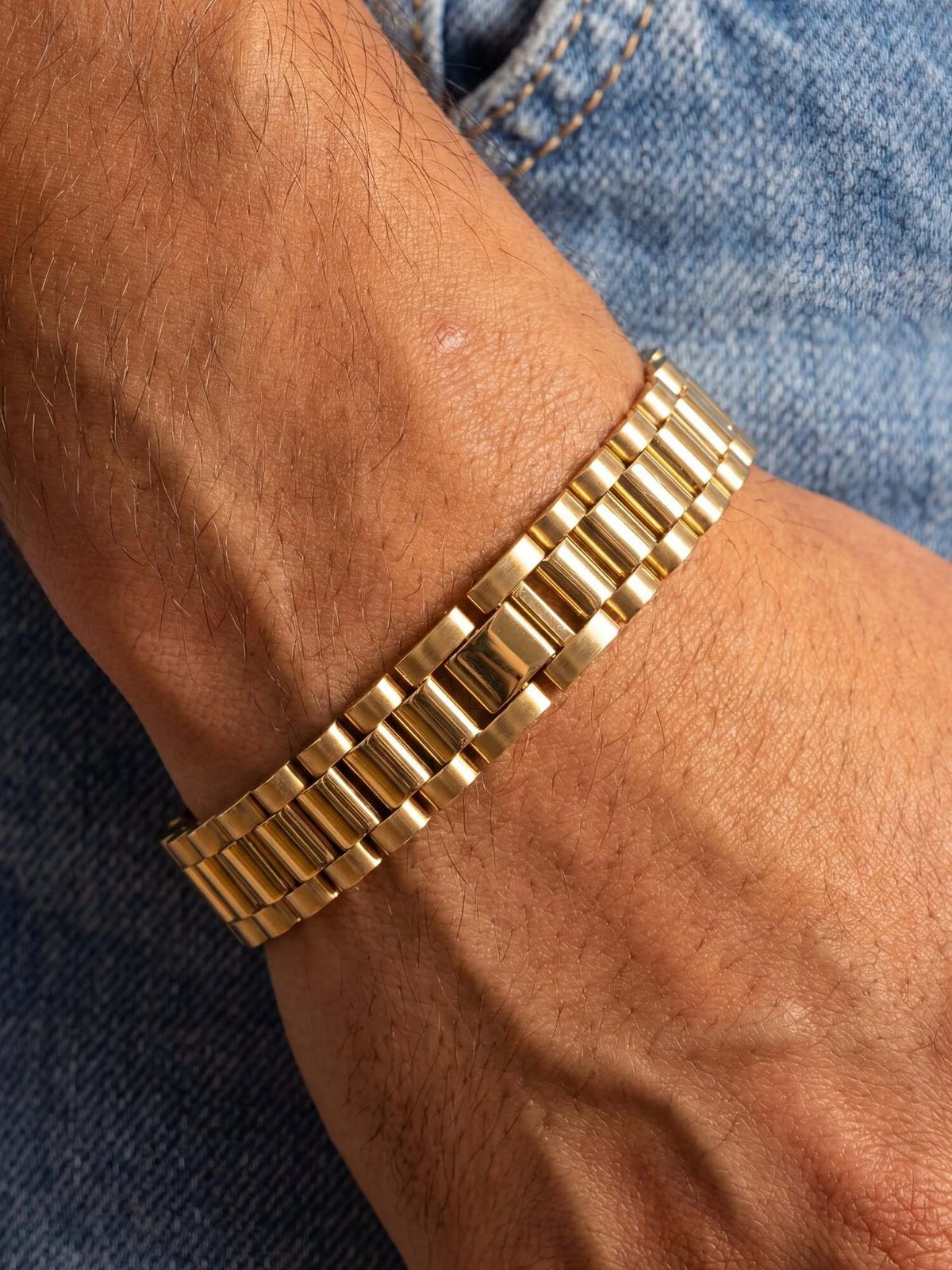
The stainless steel jewelry is bare polished steel in silver tone; the gold-tone pieces carry a finish of five PVD layers, bonded to the steel at a molecular level in a vacuum chamber rather than electroplated on top. Steel does not tarnish and that layer does not either, but the layer can be damaged: anything abrasive makes it thinner. With the iced out jewelry the problem is not the metal but the setting, because water and soap creep in there and stay.

| Material | Does it tarnish? | Do this | Never do this |
|---|---|---|---|
| Solid 925 sterling silver | Yes, yellow to brown to black | Foil and baking soda, silver cloth, mild soap | Toothpaste, scouring pad |
| Stainless steel (bare, or 5 PVD layers) | No, but dulls from soap residue | Lukewarm water, drop of dish soap, soft cloth | Silver cloth, silver dip, any abrasive |
| Iced out with set stones | The setting discolors, the stones go dull | Soft toothbrush, soap, dry immediately | Soaking, ultrasonic bath, silver dip |
3. The foil and baking soda method, for solid silver only
This is the method you want on a tarnished silver chain or bracelet without stones. It takes the sulfur away and leaves the silver in place, and that is exactly the difference from polishing.
- Line a bowl completely with aluminum foil, shiny side up.
- Put the piece on it and make sure it touches the foil. Without direct contact nothing happens, because the contact is the reaction.
- Per 250 ml (1 cup) of water dissolve one tablespoon of baking soda and one teaspoon of salt. Use water just off the boil and pour it over the piece until everything is submerged.
- Wait 2 to 5 minutes. The rotten-egg smell that comes off means it is working: that is the sulfur coming loose.
- Rinse with cold water and dry the piece completely and immediately with a soft cloth.

Why this works: aluminum binds sulfur more strongly than silver does. The sulfur moves to the foil and the silver stays on your piece. The baking soda keeps the foil clean and the salt lets the current flow. It is literally an electrochemical cell between the silver sulfide and the aluminum, as the Institute for Chemical Education at the University of Wisconsin describes it. An abrasive silver polish does something quite different: it takes a small amount of silver with it every time. Do that often enough and you polish a fine link thinner over the years.
What this method is not for: anything with set or glued stones, anything with a plated or white gold layer, pearls, and silver with a deliberately blackened engraving. On that last one you lift the depth out of the letters and the engraving ends up flat and hard to read.
4. The gentle method, for anything with stones or a coating
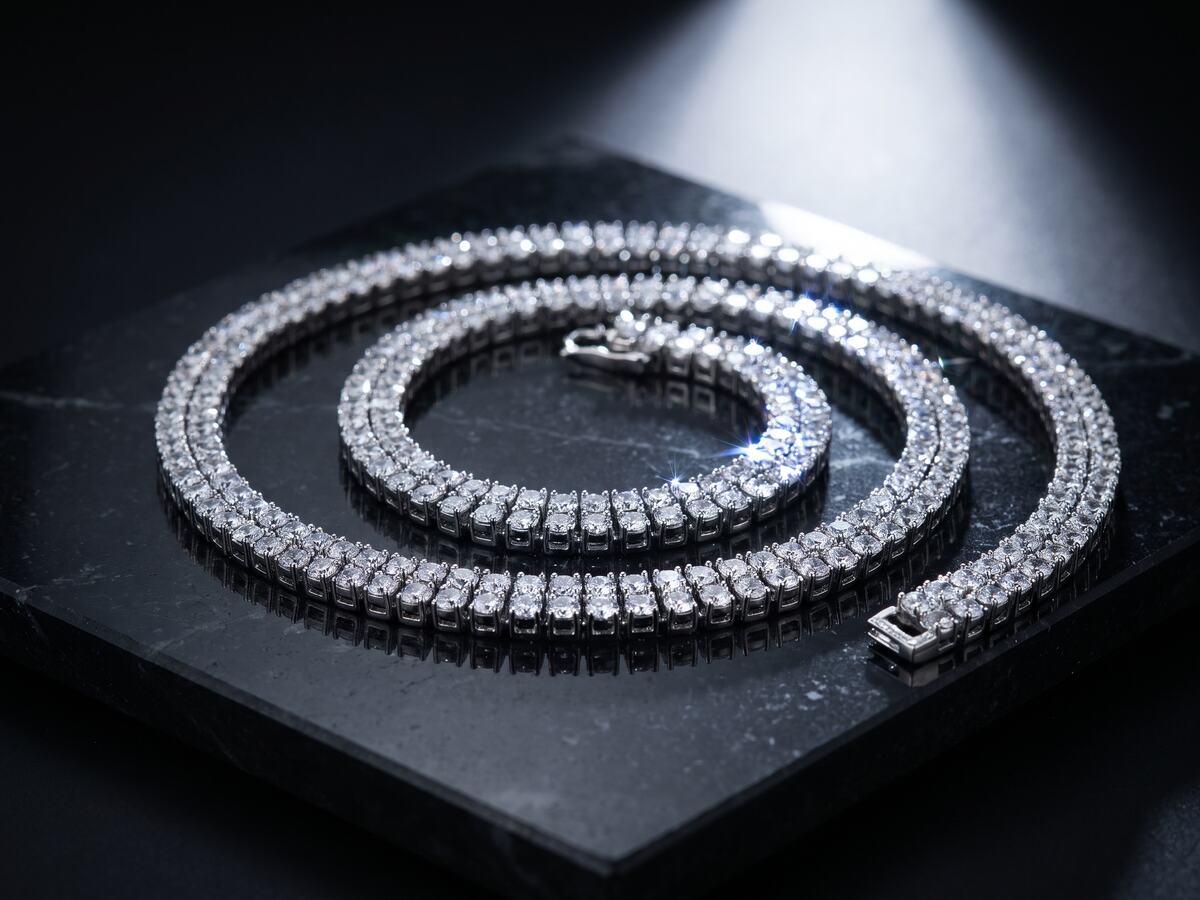
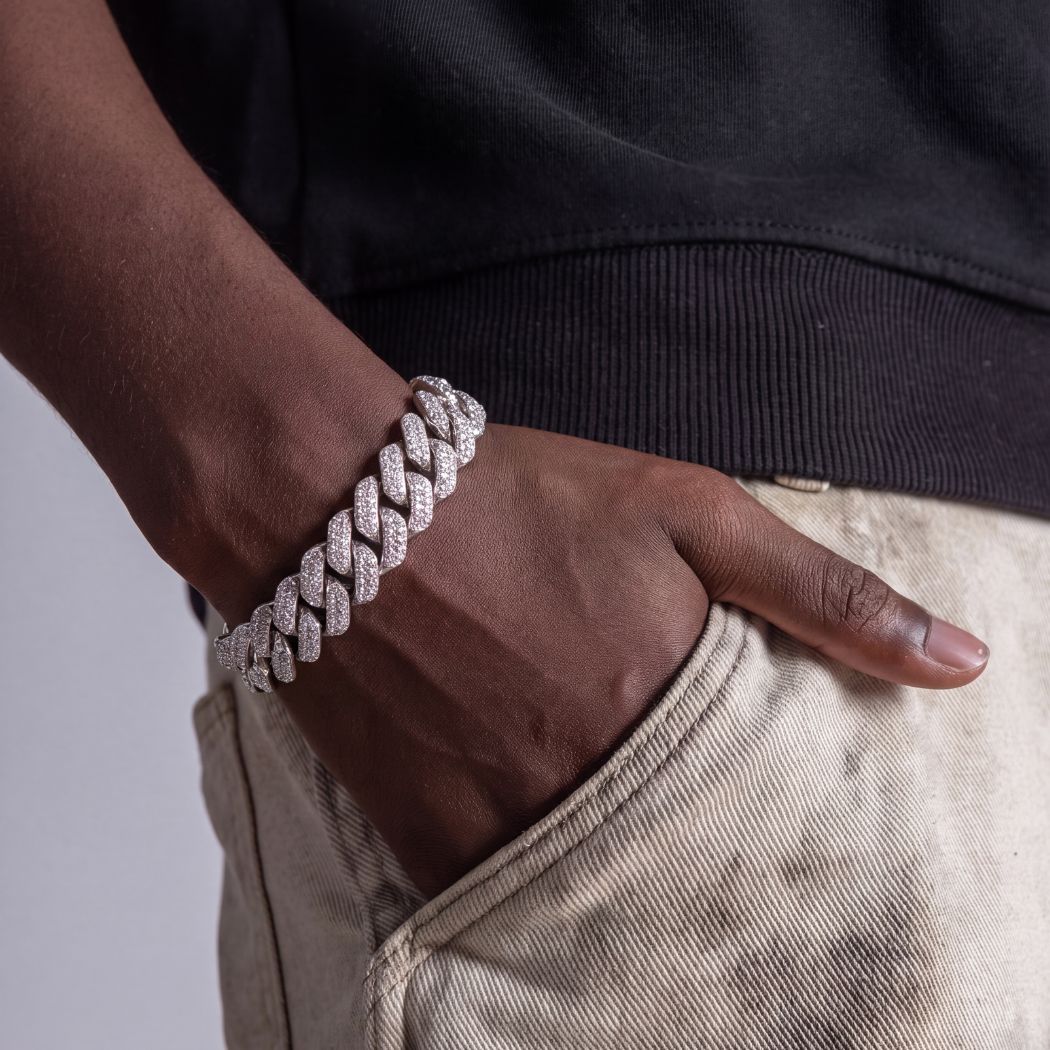
For an iced out clover bracelet, a cross necklace with colored stones or a moissanite ring, tarnish is not the issue. They go dull, and that is almost always a film of soap, skin oil and body lotion between the stones.
Take lukewarm water with one drop of dish soap and a soft toothbrush. Work along the sides of the setting and, above all, the clasp, because that is where it collects. Thirty seconds is enough.
Then comes the step everyone skips, and it is the one that makes the difference: rinse with clean water and dry the piece completely, right away, including between the stones. Water left standing in the setting dries into a white haze, and that haze is exactly why people think the stones have lost their sparkle. A hairdryer on its coolest setting blows the seams and the clasp dry.
Do not put these pieces in an ultrasonic cleaner. The vibrations are good for solid metal and bad for glued stones: they can come loose, and you only notice when one is missing.

5. Four home remedies that wreck your jewelry
- Toothpaste. The advice is everywhere, and it is wrong. The abrasive in toothpaste is silica, hardness 6 to 7 on the Mohs scale. Silver is only 2.5 to 3. So you remove the tarnish by scraping silver away, and you are left with a web of fine scratches that you see immediately in raking light. On a plated or PVD layer you literally take the color off.
- Liquid silver dip. Works on solid silver in seconds, but it attacks a white gold or plated layer and leaves settings matte and gray. Never dip a moissanite piece or an iced out piece in it.
- Scouring pads, tooth powder and dry baking soda. Same problem as toothpaste, only coarser. Baking soda works in the foil method as a solution, not as an abrasive on the links.
- Chlorine and bleach. Chlorine attacks both the silver and the alloy metals, and the effect is permanent. That is why a piece comes off before you get into the pool, and why you always rinse with tap water after seawater.
6. Storing it well beats polishing it
Tarnish is a reaction with the air, so keeping air away is the whole trick. A piece lying in a closed bag stays good for months where the same piece in an open dish turns yellow within weeks.
In practice: store every piece separately in a small resealable bag and press the air out before you close it. Separately, because a chain and a ring lying against each other scratch each other. Throw in a packet of silica gel, the kind that comes in a shoebox, because moisture speeds up the reaction.
Two places are bad. The bathroom, because it is humid. And wool, felt, rubber and untreated wood, because they give off sulfur: a silver chain in a wool scarf or a raw wooden box tarnishes faster, not slower.
What does help is wearing it. A piece that goes out daily rubs against fabric and skin and stays brighter than the same piece sitting in a drawer for six months.

7. The order you get dressed in is half the work
The simplest rule in this whole article: jewelry goes on last and comes off first. Let perfume, deodorant, hairspray and body lotion dry first, because they contain alcohol and oils that dull the finish and speed up tarnish.
Working out and swimming: take it off. Sweat contains sulfur-bearing amino acids, so you are carrying the cause of tarnish yourself. Chlorine and salt do the rest.
You can shower in solid silver, but it gains you nothing: soap residue stays behind in the links and dulls the shine. On earrings and small bracelets that shows fastest, because the seams there are the finest. With 18K gold plated jewelry you take it off before the shower and the gym anyway.

Where do you start?
Has your silver chain or bracelet turned black and are there no stones in it? Foil, baking soda, salt, hot water, two minutes. Done, and no silver is lost.
Are there stones in it, or is it steel with a coating? Lukewarm water, one drop of dish soap, soft toothbrush, then dry it completely. Nothing else.
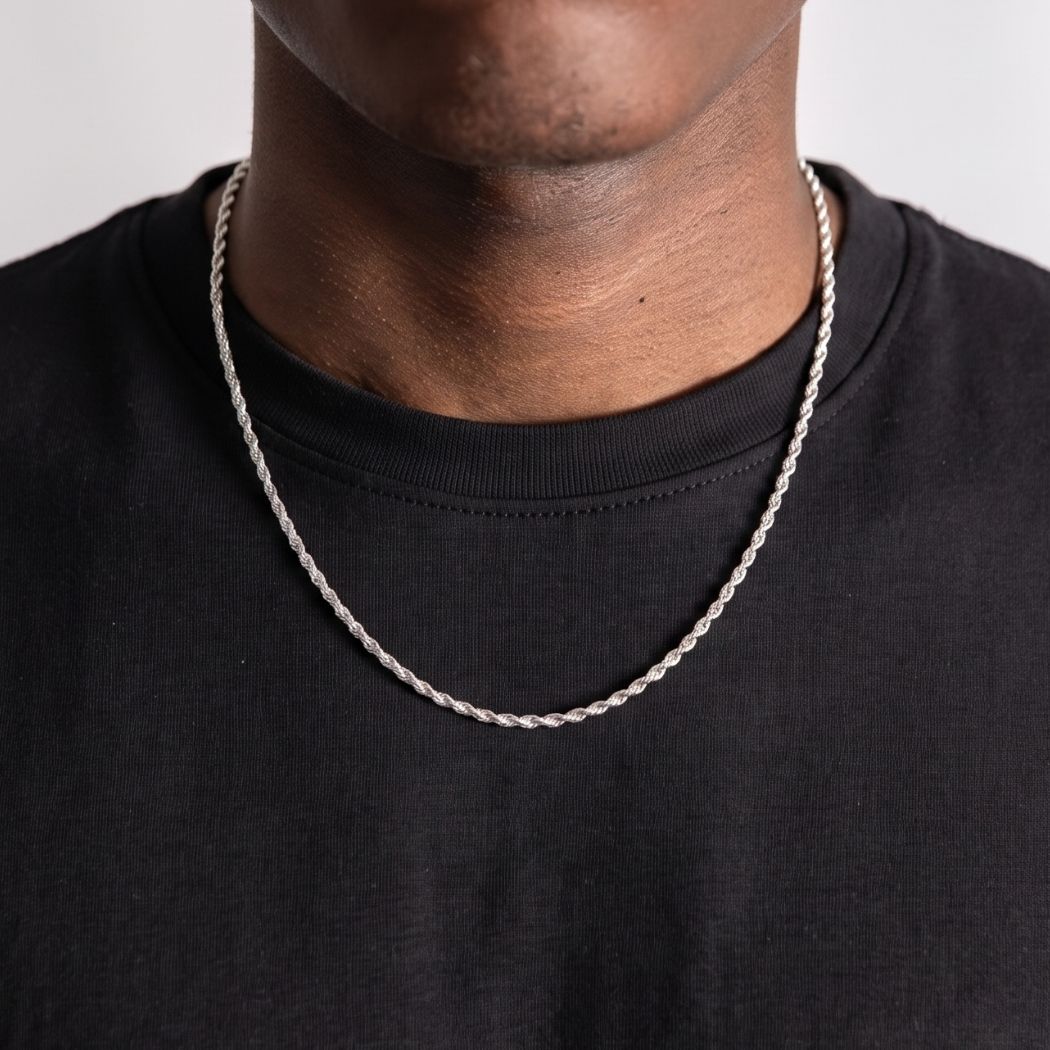
If you want as little of this maintenance as possible, look at the stainless steel collection, because it does not tarnish at all. If you want solid silver you can restore for a lifetime, the 925 sterling silver jewelry is there, with the 4 mm cuban chain and the 3 mm rope chain as our two best sellers. And if you want a piece with stones, start at the tennis jewelry.
Frequently asked questions
Why is my 925 silver chain turning black?
Silver reacts with sulfur in the air and forms silver sulfide, a black layer a few thousandths of a millimeter thick. That is not rust and not a defect. It is normal behavior for 925 sterling silver, which is 92.5% silver and 7.5% copper.
Can I use toothpaste to clean silver?
No. The abrasive in toothpaste is silica, hardness 6 to 7 on the Mohs scale, while silver is only 2.5 to 3. You remove the tarnish by scraping silver away and are left with fine scratches. On a plated or PVD layer you take the color off.
Does aluminum foil with baking soda really work?
Yes, on solid silver without stones. Line a bowl with foil, lay the piece so it touches the foil, pour hot water over it with one tablespoon of baking soda and one teaspoon of salt per 250 ml (1 cup), and wait 2 to 5 minutes. Aluminum binds the sulfur more strongly than silver does, so the sulfur moves to the foil and the silver stays put.
How do I clean iced out jewelry with stones?
With lukewarm water, one drop of dish soap and a soft toothbrush along the setting, about thirty seconds. Then rinse and dry it completely, right away, including between the stones, because dried water leaves a white haze. Do not soak it, do not use an ultrasonic bath and never use silver dip.
Does stainless steel tarnish too?
No. Silver-colored stainless steel is bare steel with no layer and does not react with sulfur, and neither do the five layers of PVD on the gold-colored pieces. It does go dull from soap residue and skin oil, and abrasives damage the PVD layer. Lukewarm water with a drop of dish soap and a soft cloth is enough.
How do I stop my silver jewelry from tarnishing?
Store every piece separately in an airtight bag with the air pressed out, with a packet of silica gel. Do not keep it in the bathroom and not in wool, felt, rubber or untreated wood, because those give off sulfur. Put your jewelry on last and take it off first, and let perfume and lotion dry first.