

Article: Which finger for which ring (men): ring meaning by finger and where to wear a signet ring
Which finger for which ring (men): ring meaning by finger and where to wear a signet ring
A German wears his wedding ring on the right hand, a Frenchman on the left. An Englishman wears his signet ring on the little finger of the hand he does not write with, while German Wikipedia names the ring finger. Which ring goes on which finger is not a law but a tradition, and that tradition changes from country to country.
This page covers what a ring traditionally means on each finger, which hand the wedding ring goes on in which country, where the signet ring comes from and why it ended up on the pinky, and how many rings you can wear on one hand before it becomes too much. With the source for each claim, because plenty of stories about rings and fingers circulate without one.

1. Ring meaning by finger at a glance
You have five fingers on each hand, and each one carries a tradition. Part of it comes from palmistry, which names the mount below each finger after a god or planet: Jupiter below the index finger, Saturn below the middle finger, Apollo below the ring finger, Mercury below the pinky and Venus at the base of the thumb. The other part comes from how rings were actually used: to seal documents, to show you are married, or to show you belong to a profession.
Read the meanings as symbolism, not as rules. What people do read is a ring on the ring finger as a wedding band and a signet ring on the pinky as the classic choice.
The table puts the five fingers side by side: the traditional meaning, the ring that usually sits there, and what to watch in practice.
| Finger | Traditional meaning | Typical ring | Watch out |
|---|---|---|---|
| Thumb | Willpower and independence (mount of Venus at the base) | Wide band without a face | Your thickest finger. Our largest size is US 11: 20.6 mm inner diameter |
| Index finger | Authority and ambition (Jupiter) | Signet ring or a statement ring | In plain view when you point or shake hands |
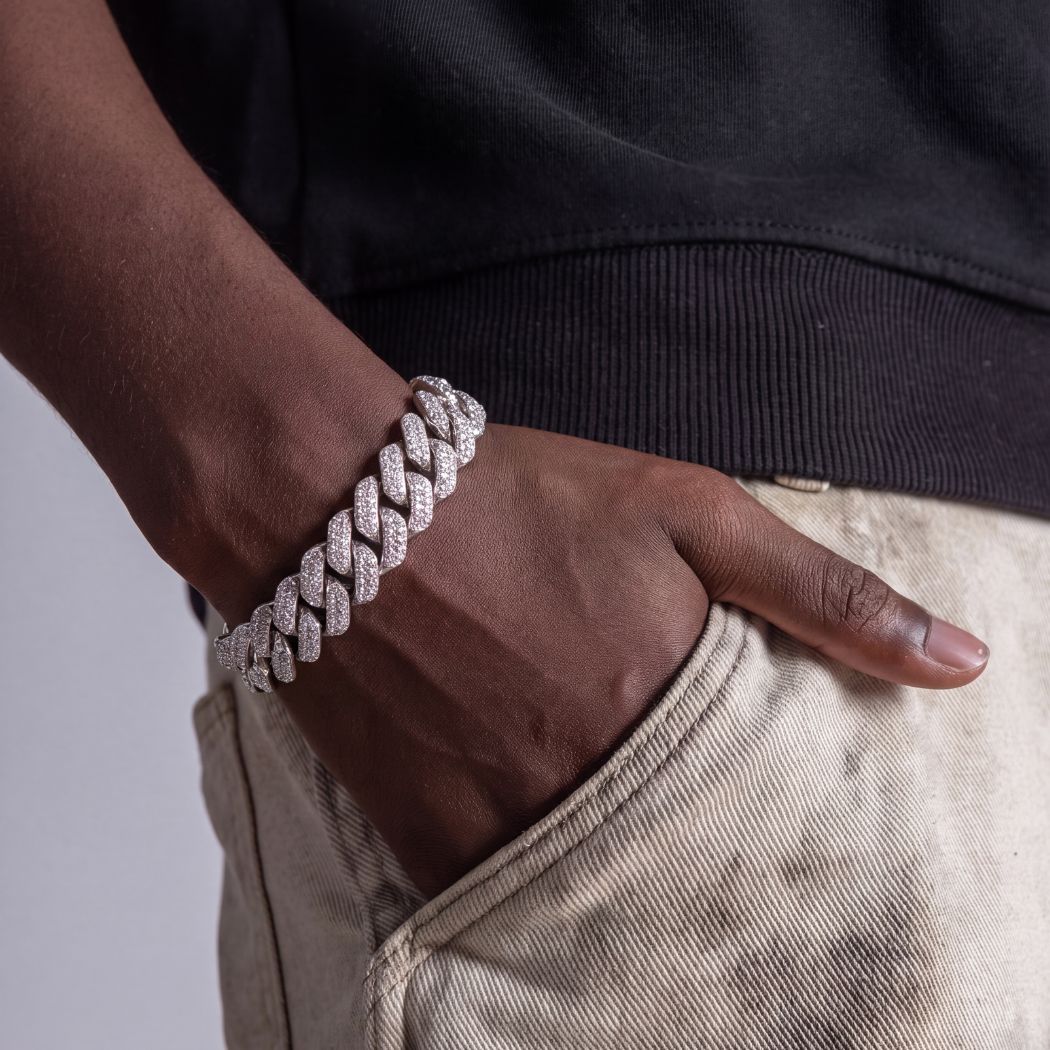
| Middle finger | Balance and responsibility (Saturn) | The heaviest ring: Cuban ring, iced out ring | Longest finger, in the center of your hand |
| Ring finger | Commitment and love (Apollo) | Wedding band, in Germany also the signet ring | Left or right depending on the country, see point 4 |
| Pinky | Communication and intellect (Mercury) | Signet ring, slim ring with a single stone | Smallest finger: measure it on its own |
2. Thumb and index finger: the rings that stand out
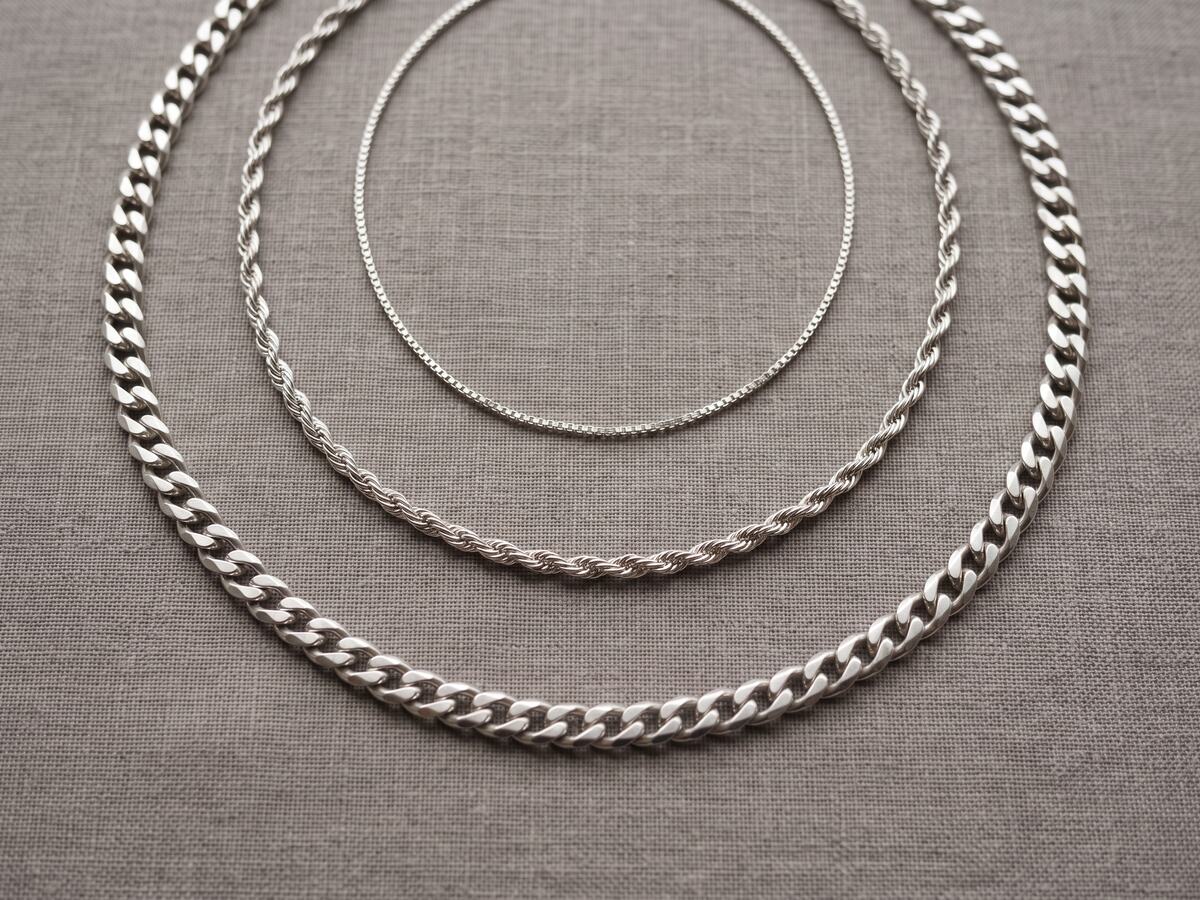
A ring on your thumb is the least traditional choice, and that is exactly why it stands out. Palmistry links the thumb to willpower. In practice it is your thickest finger, so you need a bigger size than on your ring finger. How much bigger varies from hand to hand, so measure it separately. If you come out above 20.6 mm inner diameter, our largest size, US 11, is too small. Choose a band without a face for the thumb, such as the Cuban ring: the links run all the way around and lie flat, so there is no face to turn away.
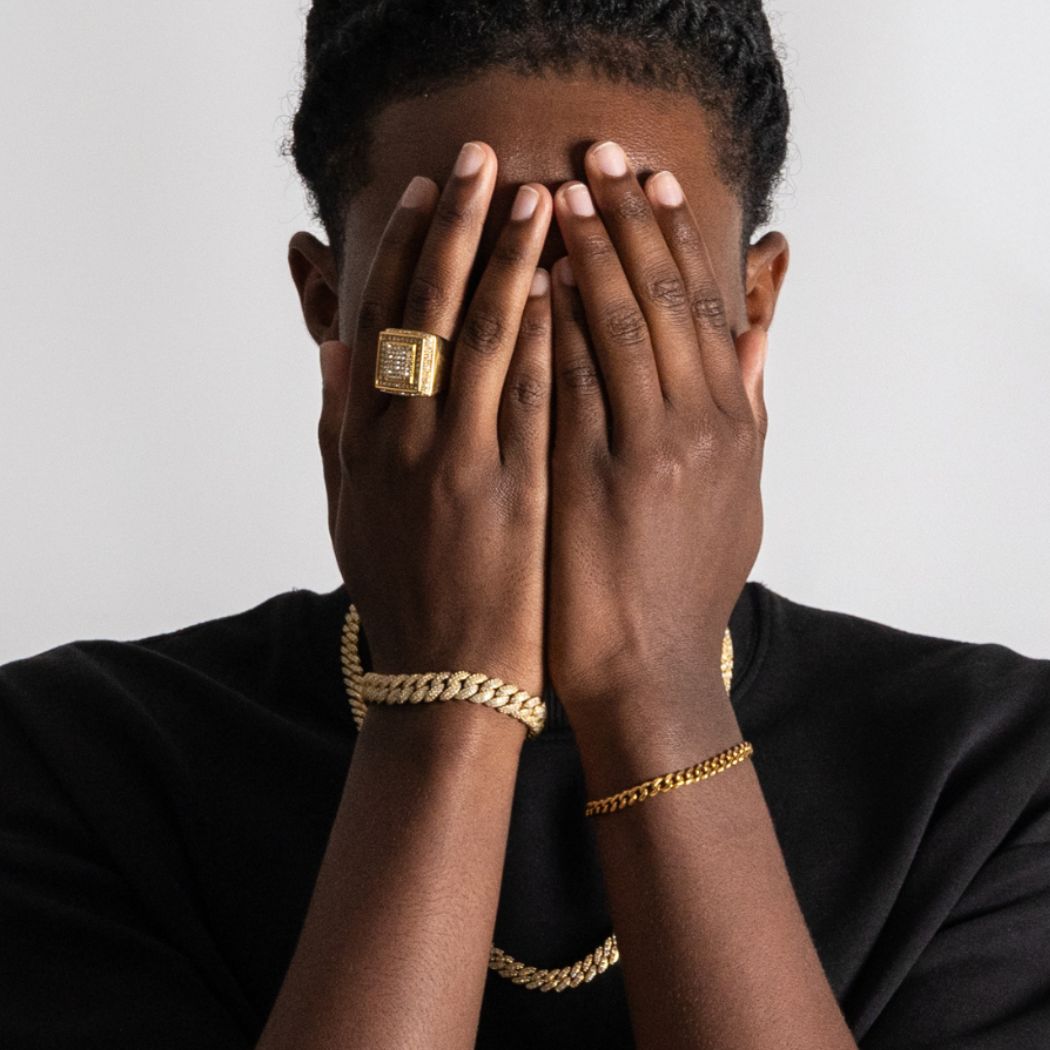
Palmistry assigns the index finger to Jupiter, king of the gods, which is why a ring there stands for authority and ambition. A signet ring on the index finger is a modern choice: the face is in view when you point, write or shake hands. That is also where it shows when it turns, so pick the smallest size that slides comfortably over your knuckle. The gold-tone Cuban ring works here too, if you would rather let a ring without engraving do the talking.

3. Middle finger: the place for your heaviest ring
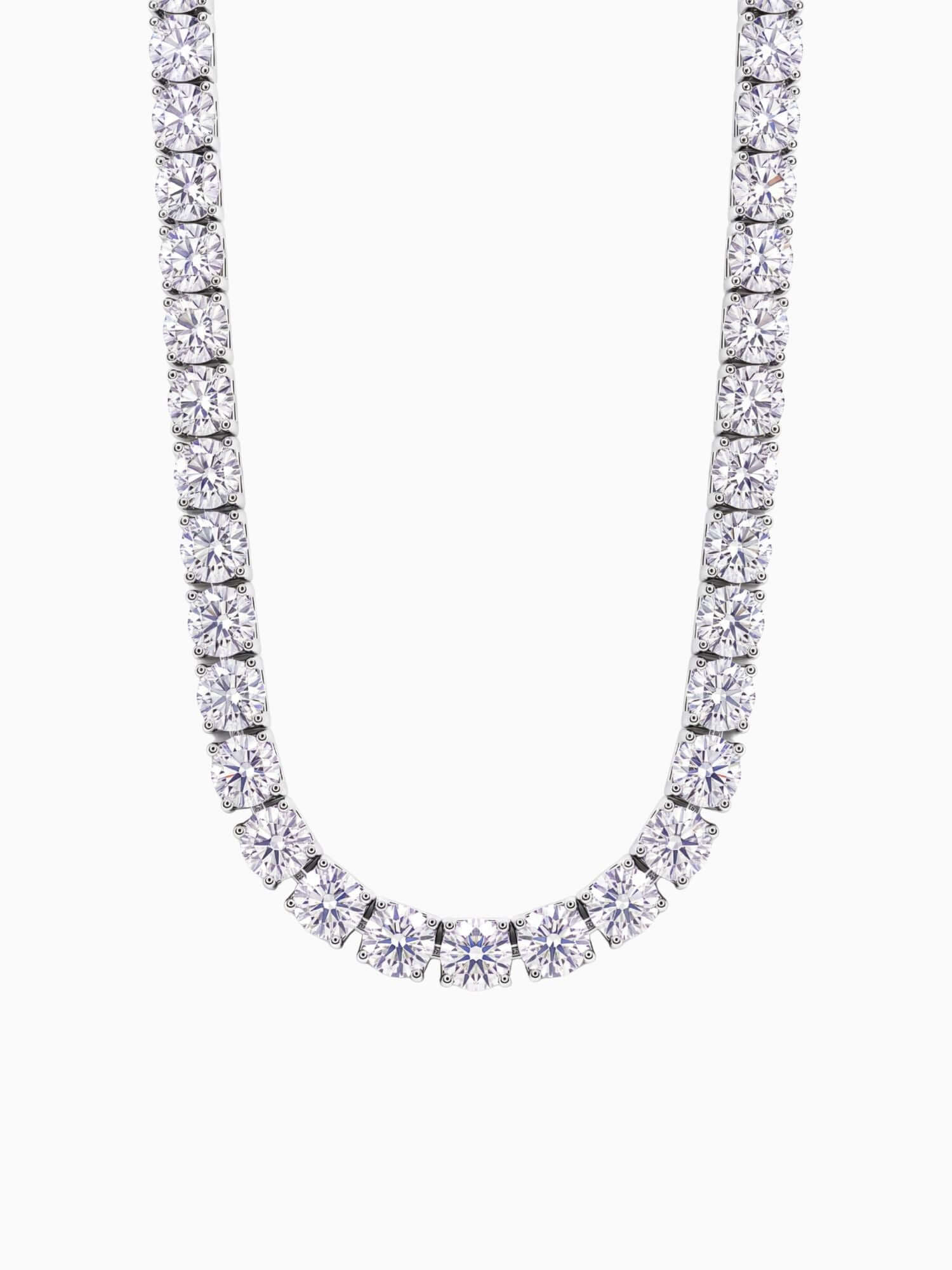
The middle finger is the longest finger and sits in the center of your hand. A ring there splits the line of your hand right down the middle, which makes it the place for the ring that is allowed to stand out most: a wide Cuban ring or the iced out box ring, set all the way around with cubic zirconia.
Two rules. Do not wear a ring on the middle finger next to an equally heavy ring on the ring finger: two strong rings side by side cancel each other out. And a ring on your middle finger takes the most hits when you grab things. The box ring has no coating, the silver-tone steel is bare, so there is nothing to wear through. Still take it off for DIY jobs and the gym, because a hard knock can loosen a set stone. More rings with cubic zirconia are in the iced out rings.

4. Ring finger: wedding band left or right
The ring finger is the only finger with a meaning almost everyone knows: this is where the wedding band goes. Which hand depends on the country.
- Right: Germany and Austria (where the engagement ring sits on the left and the wedding band on the right), Poland, Russia and most of Spain.
- Left: France, the United Kingdom, Italy, Sweden, Finland and the United States.
- It varies: in the Netherlands, Protestants traditionally wear the wedding band on the right and Catholics on the left. In Spain, Catalonia, Valencia and the Balearic Islands wear it on the left.
What does that mean for another ring? Do not put it on the same finger as your wedding band. France has one exception: there the eldest son traditionally wore his signet ring on the left ring finger, together with the wedding band, while younger sons wore it on the right pinky. If you do not wear a wedding band, keep in mind that a ring on the ring finger of the wedding hand in your country will be read as one. Choose the middle finger or the pinky instead.
5. Pinky: why the signet ring sits there
Traditionally, a signet ring is worn on the pinky or the ring finger of your least dominant hand, with the pinky the most common. The Roman writer Pliny already described how the signet ring moved to the little finger over time. In England, the pinky of the non-dominant hand has been the standard place for about a century. Roughly nine in ten people are right-handed, so for most men that means the left pinky.
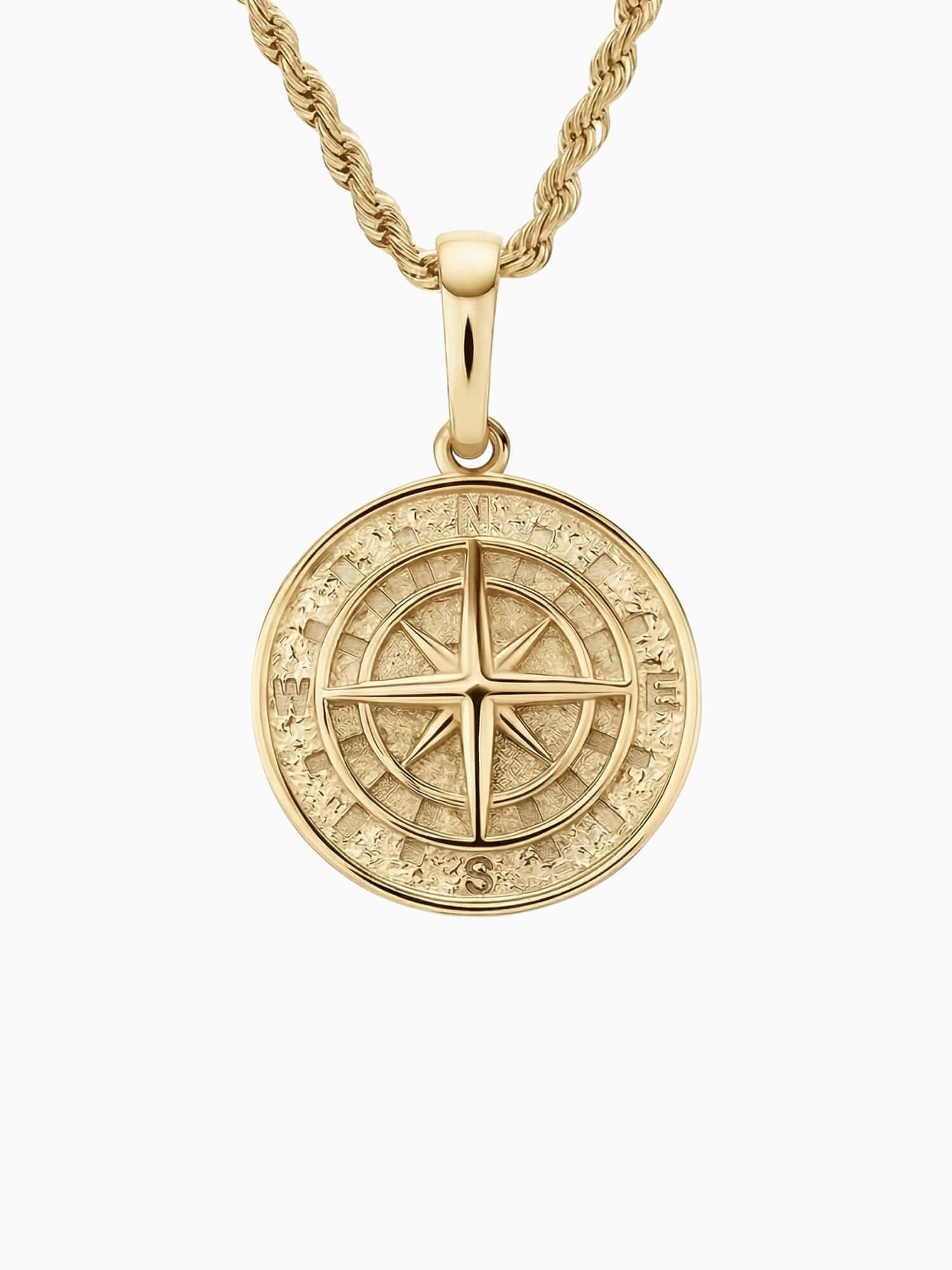
The reason is practical. On your writing hand a ring takes more knocks and wears faster. With our gold-tone signet ring that counts double: the 18K plating of 2.5 microns sits on stainless steel, and that layer wears first on the hand that does the most work. The silver-tone signet ring is bare steel without a coating and can go on either hand.
A pinky ring does not have to be a signet ring. Since April 25, 1925, Canadian engineers have received an iron ring that they wear on the pinky of their working hand, so on the very hand that does the most.

6. What is a signet ring, and which way should it face?
A signet ring is a ring with a flat face engraved with a mark: initials, a monogram, a symbol or a family crest. The name comes from the Latin signum, meaning sign. Signet rings were already used in ancient Egypt: in Genesis, Pharaoh takes his signet ring off his hand and puts it on Joseph's when he sets him over all of Egypt. Whoever pressed the ring into liquid sealing wax put their signature on the document.
A signet ring made for sealing is therefore engraved as a mirror image, so the impression reads the right way round. Since at least the 16th century there have also been rings whose engraving is not reversed: those are made to be worn, not to seal. A modern signet ring with initials belongs to that second group.
Which way the engraving should face is something traditions disagree on. English etiquette, as the London jeweler Bentley & Skinner describes it, has the engraving face the wearer. German Wikipedia says the opposite: the engraving should be readable for the person across from you. In France the direction even carried a meaning: the top of the engraving toward your fingernails meant single, toward your hand meant married.
A family crest on your signet ring is the classic engraving, and we do it with photo engraving: you send us an image of the crest and the laser puts it on the flat face. Both signet rings offer that option, the gold-tone and the silver-tone. For a crest with fine lines, silver-tone is the better choice: without a coating, the engraving keeps the same color as the ring. On the gold-tone ring the laser cuts through the 2.5 micron plating down to the steel, which gives a simple crest more contrast. Send the crest as a sharp image, ideally black on white. What else fits on the face is covered in ring engraving.
7. How many rings on one hand?
Combining rings goes wrong on number and width, rarely on color. Four rules:
- Start with one ring per hand. Two is a combination, three per hand is the limit, and more than five in total looks like a costume.
- Leave a finger free between two statement rings. A Cuban ring on the middle finger and a signet ring on the pinky works; the same two side by side does not.
- Pair wide with narrow: next to a wide band, a slim ring of 2 to 3 mm or a ring with a single stone fits.
- Keep one color per hand, gold-tone or silver-tone. Mixing works, but on two different hands.
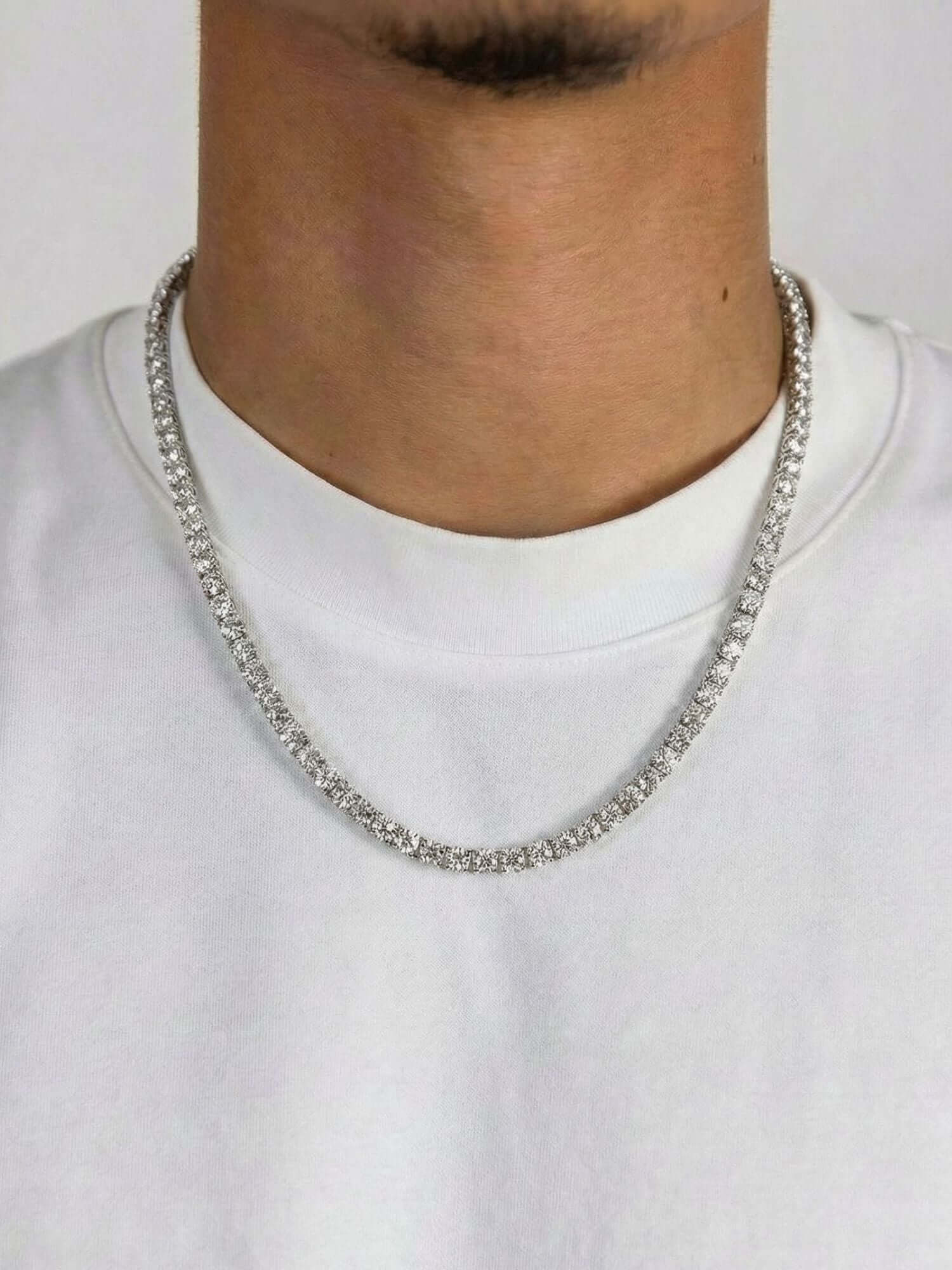
A slim ring with a single stone is the easiest second ring next to a wide band. Choose moissanite over cubic zirconia: moissanite is 9.25 on the Mohs scale, against 8 for cubic zirconia, so the facets keep their edges. More stones are in the moissanite jewelry.

8. Which size on which finger?
Every finger has its own size, and your left and right hands differ too. So measure the finger the ring will actually go on. How to do that, and which circumference matches which US size, is in the ring size chart. The rule in short: choose the smallest size that slides comfortably over your knuckle. Only with the wide bands, the Cuban ring, the Ice Blox and the box ring, do you take the larger size when in doubt. For a pinky ring, measure the pinky itself: never reuse the size of your ring finger.
For reference: US size 8, an inner diameter of 18.1 mm, is our most ordered ring size, and more than two in three rings we sold in the twelve months to October 2026 were size 7, 8 or 9. Our signet rings come in US sizes 6 to 10 (16.5 to 19.8 mm), the Cuban ring and the box ring in 7 to 11, the moissanite ring in 5 to 9.
Where to start
For a classic signet ring, choose the pinky or ring finger of the hand you do not write with, and start with the signet rings: gold-tone with an 18K plating of 2.5 microns on steel, or silver-tone, bare steel that engraves more sharply. An engraved ring is made for you and cannot be returned, so measure first. For more room for text, look at the engravable jewelry. For a ring that does the work without engraving, wear it on your middle finger and pick from the rings. The chain and bracelet to go with it are in jewelry for him.
Frequently asked questions
What finger do you wear a signet ring on?
Traditionally on the pinky of the hand you do not write with: in England that has been the standard place for about 100 years. In Germany it is often the ring finger, and in France the eldest son wore it on the left ring finger next to his wedding band. If you wear a wedding band, choose the other hand or another finger.
Why do Brits wear signet rings?
Because the signet ring started as a seal: pressed into sealing wax, it worked as a signature, a use that goes back to ancient Egypt. In Britain the pinky of the non-dominant hand has been its standard place for about 100 years, and today it is worn as a mark of identity, usually engraved with initials.
What does a pinky ring mean for a man?
In palmistry the pinky stands for communication and intellect (Mercury). In practice it is the classic place for a signet ring. Since 1925, Canadian engineers have worn an iron ring on the pinky of their working hand.
Which hand does a wedding ring go on?
It depends on the country. In Germany, Austria and Poland on the right; in France, the United Kingdom, Italy, Sweden and the United States on the left. In the Netherlands, Protestants traditionally wear it on the right and Catholics on the left. In Spain it is the right hand, except in 3 regions: Catalonia, Valencia and the Balearic Islands.
What is a signet ring?
A ring with a flat face engraved with initials, a monogram, a symbol or a family crest. It was already used in ancient Egypt to seal documents in wax. Since at least the 16th century there have also been signet rings made to be worn, with an engraving that is not mirrored. We engrave a family crest with photo engraving, on both signet rings in US sizes 6 to 10.
How many rings should a man wear?
Start with one ring per hand. Three per hand is the limit and more than five in total gets busy. Leave a finger free between two statement rings and pair a slim 2 to 3 mm ring with a wide band.
What ring size do I need for my pinky?
Measure the pinky itself and never reuse your ring finger size. An inner diameter of 16.5 mm is US size 6, 15.7 mm is size 5. For a signet ring, choose the smallest size that slides comfortably over your knuckle.