

18K gold plated: what 2.5 microns over 925 silver means
Plated is a number, not an adjective. Two chains can both be called 18K gold plated while the gold layer on one is ten times thicker than on the other. So the word tells you almost nothing; the number behind it tells you everything.
With us that number is fixed: every piece in the 18K gold plated collection is 2.5 microns of 18K gold over a core of solid 925 sterling silver. This guide explains what 2.5 microns amounts to in proportion, why the core underneath matters more than the layer itself, where that layer wears through first, and how this build compares to stainless steel with five layers of PVD.

1. What plated actually means
Plating is the application of a layer of gold onto another metal. It happens electrolytically: the piece hangs in a bath, current runs through it, and the gold settles on the surface. The longer that runs, the thicker the layer.
18K refers to the alloy of that layer, not to the piece as a whole: 18 parts in 24, or 75 percent pure gold. Deliberately not 24K, because pure gold is softer and looks more orange, while 75 percent gives the warm yellow tone most people mean when they say gold.
What the word plated does not tell you is how thick that layer is. That is exactly the difference you only notice after a year of wear. A flash layer of a fraction of a micron is off the clasp within a few months; a layer of 2.5 microns stays on for years. The same two words on the label, a completely different piece in your hand.
2. What 2.5 microns amounts to
A micron is a thousandth of a millimeter, so 2.5 microns is 0.0025 mm. A sheet of printer paper is about 100 microns thick, a human hair around 70 microns. So the gold layer on your chain is roughly one twenty-eighth of a hair.
Put it next to the chain itself and it becomes concrete. The narrowest rope strand we carry is 1.5 mm wide, or 1500 microns. The gold layer is one part in 600 of that. On the widest rope of 3.8 mm, or 3800 microns, the ratio is one in 1520.
Even so, thicker is not automatically better. A link chain consists of hundreds of parts moving all day, and the gold layer has to flex every time. Make it too thick and it also gets stiffer, and you get hairline cracks on the outer bend of the links.
3. The core underneath does the real work
Every gold layer wears through somewhere. The question is not whether that happens, but what shows up when it does.
If the gold sits on a base metal core, the first wear-through reveals a different color underneath: gray steel or reddish copper, in the middle of a gold link. That contrast is what makes a piece look worn out, far more than the wear itself.
Our core is solid 925 sterling silver, meaning 92.5 percent pure silver topped up with copper for strength. If the layer wears through there, a light, pale precious metal appears instead of a foreign color. From a meter away you barely notice it.
Because the base is a precious metal, a goldsmith can also re-plate a chain like this. On a base metal core that is usually not worth the effort, on 925 sterling silver it is. And 925 contains no nickel, which makes this build suitable for anyone who gets red patches on the neck from cheap alloys.

4. Where the layer wears through first
Wear does not spread evenly. Three spots always go first.
The clasp. You grip the lobster clasp twice a day, with your nails on exactly the same spot. On practically every plated piece it starts here.
The inside of the links. That is metal rubbing on metal, hundreds of times a day, where you cannot see it. On a rope chain, which is made of twisted strands, that contact area is larger than on a flat cuban link.
The points that rub against clothing. A shirt collar, the zipper of a jacket, the strap of a bag. Textile feels soft but over thousands of movements it works like very fine sandpaper.
On a wrist it goes faster than on a neck: your hand meets table edges, a keyboard and a door handle all day. If you want to keep the gold layer intact, take the bracelet off for sport and chores.
5. The seven pieces we carry in 18K plated
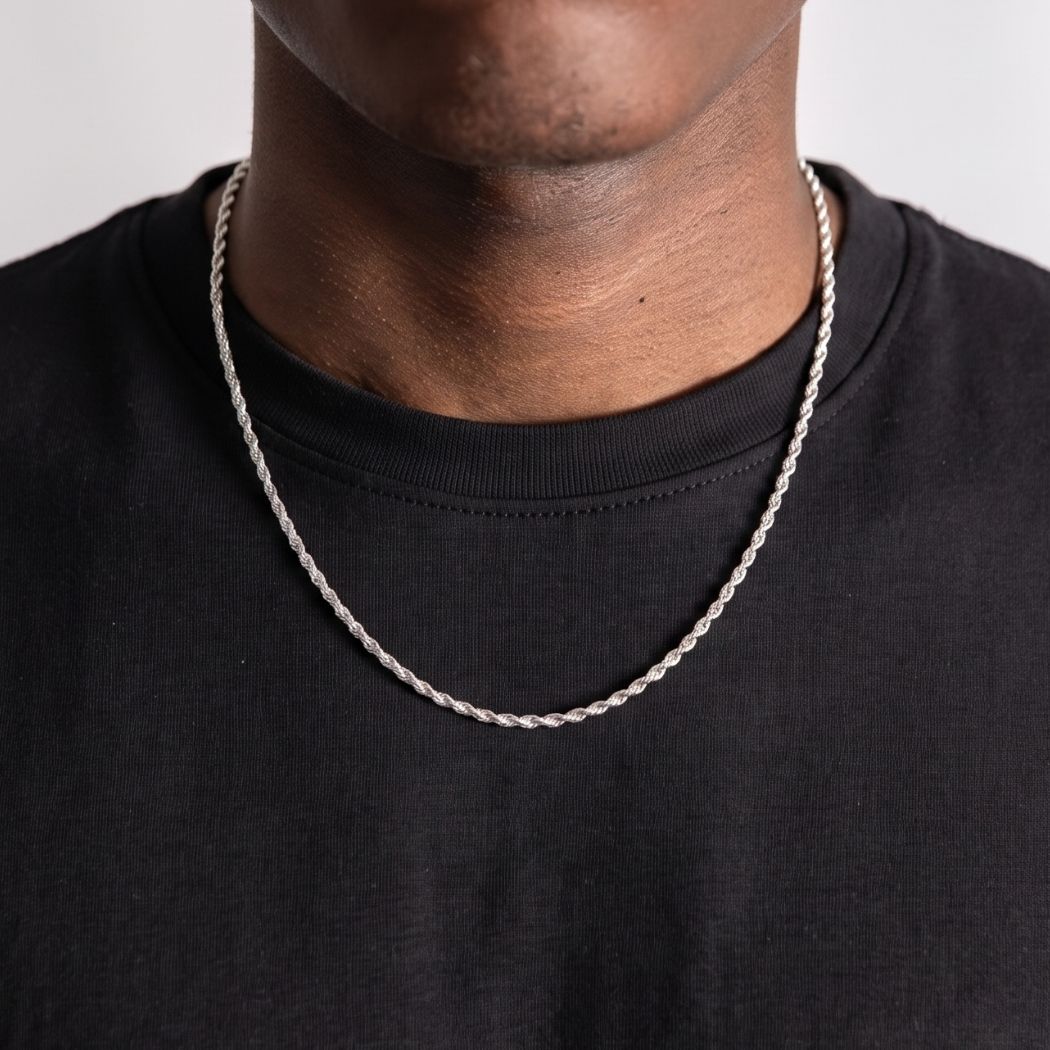
The rope chain runs in three widths: 1.5 mm, 2.8 mm and 3.8 mm. All three in 50, 55 and 60 cm (20, 22 and 24 inches), all three with a lobster clasp, all three 2.5 microns of 18K gold on 925 silver.
Watch out for a mix-up you see regularly: 2.5 mm does not belong in that row. That width does exist in our range, but it is the king link, a completely different braid. The rope ladder is 1.5 / 2.8 / 3.8 mm with nothing in between.
1.5 mm stays fine under an open shirt and is the choice if a pendant still has to go on it. 2.8 mm is the middle size you notice without it demanding attention. 3.8 mm is recognizable from ten meters away and wears best on its own.

Cuban and king link in the same build
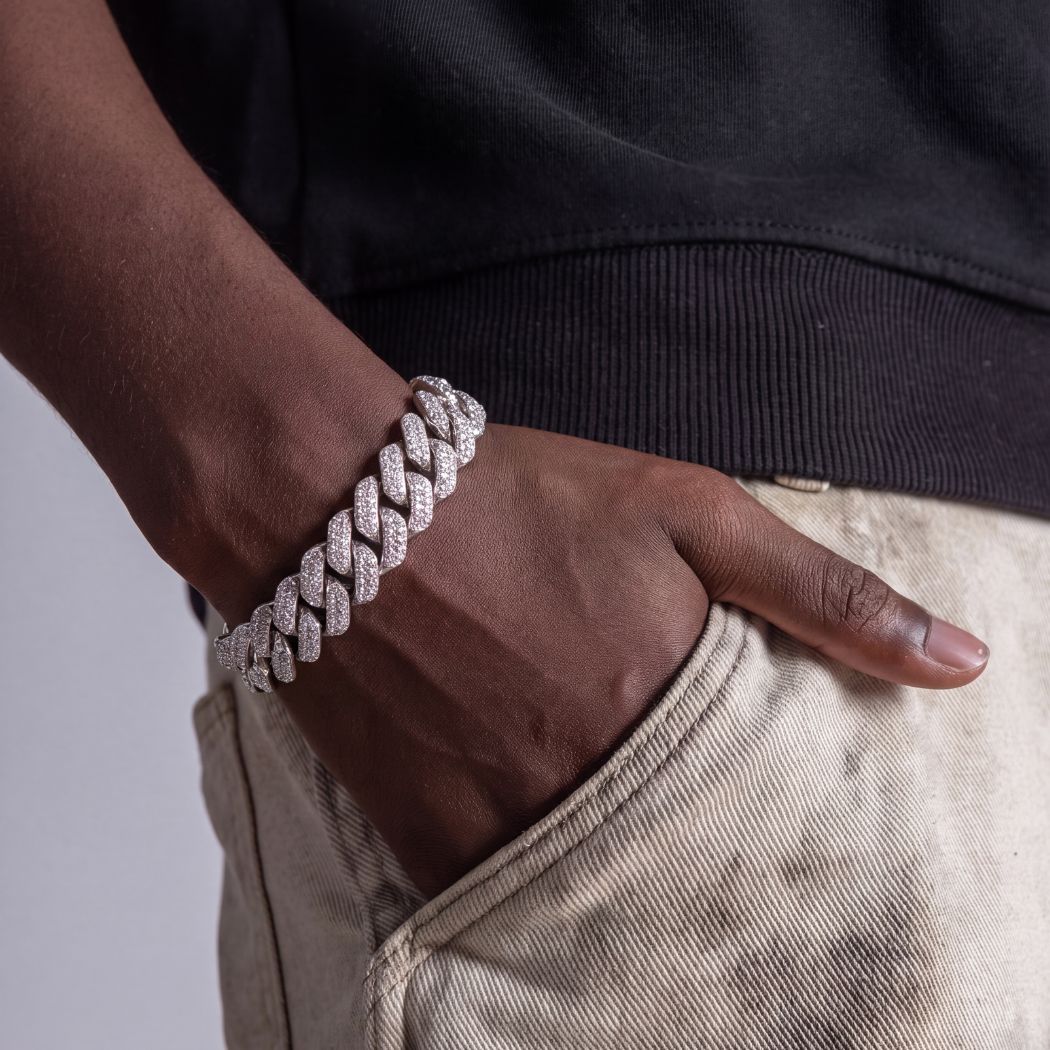
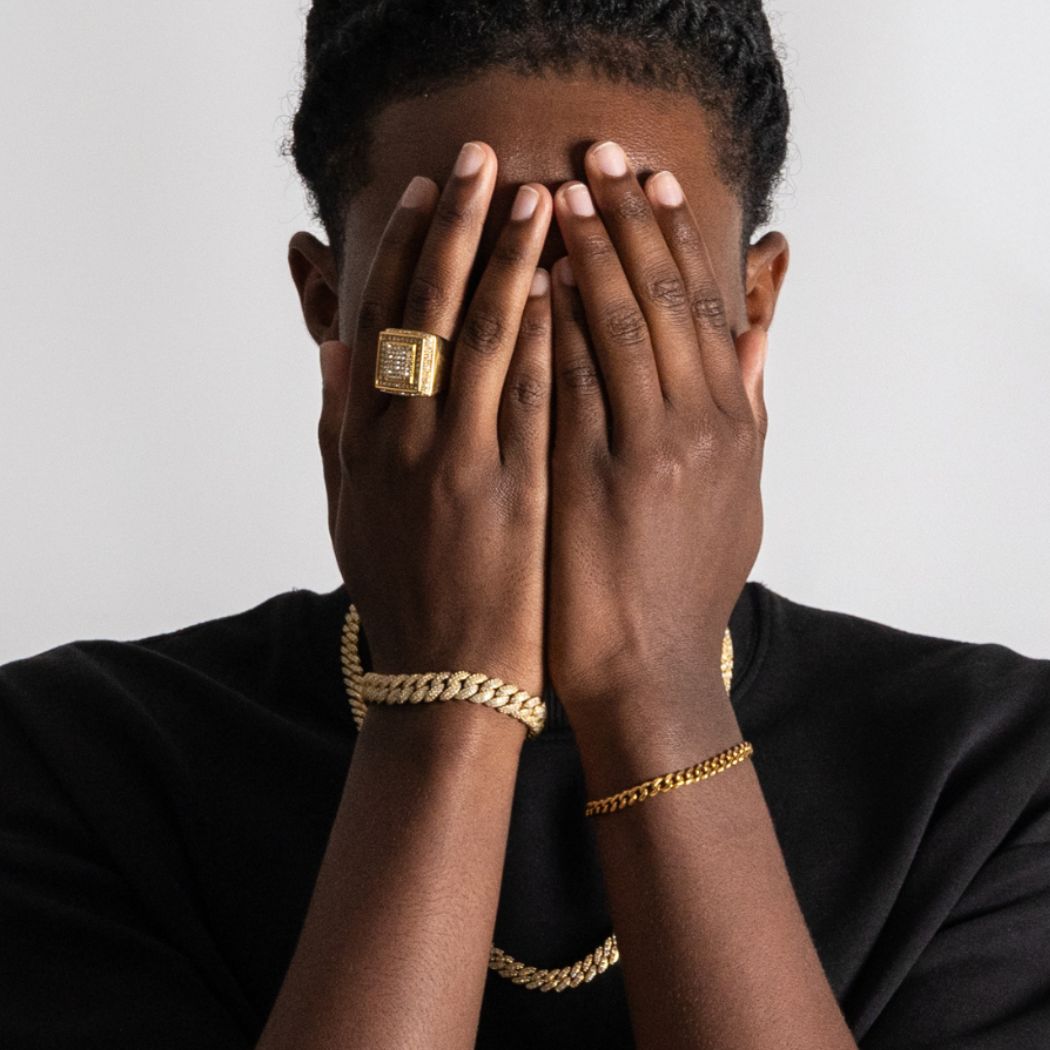
Next to the rope we carry two links with exactly the same construction. The cuban chain of 5 mm is the flat, wide variant. The king link chain of 2.5 mm is the braided link: narrower, but fuller and heavier through the braid than those 2.5 mm suggest. Both run in 50, 55 and 60 cm (20, 22 and 24 inches).
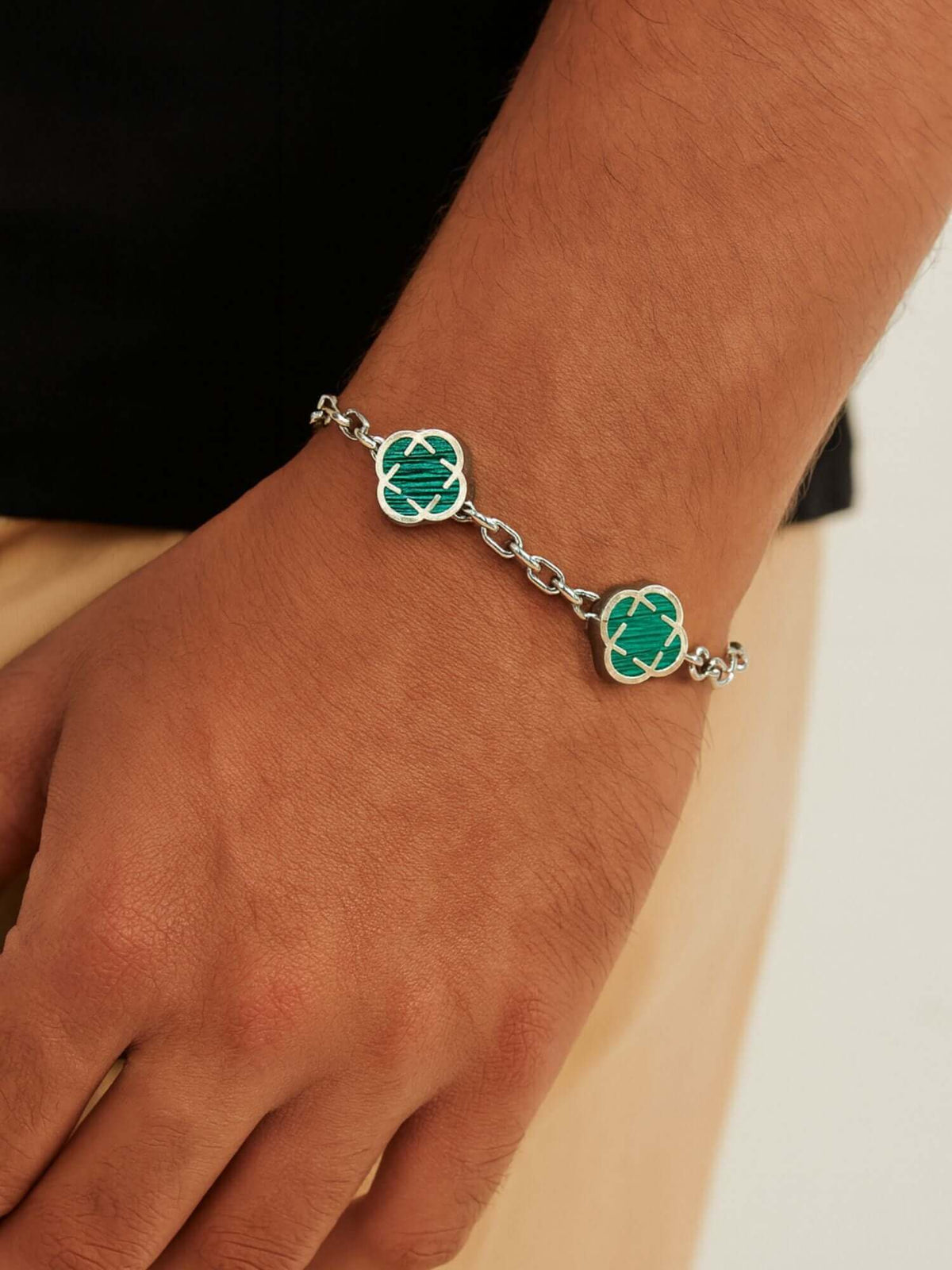
For the wrist there are two, both in 18, 20 and 22 cm (7, 8 and 8.5 inches): the cuban bracelet of 5 mm and the king link bracelet of 2.5 mm. If you wear chain and bracelet together, pick the same link; then it looks like a set.
Torn between the three rope widths? This comparison puts them side by side.

6. Plated on silver versus five layers of PVD on steel
These are the two ways we make gold color. Solid gold is only in two pairs of 14K pavé stud earrings with lab-grown diamond; everything else gold-colored in the store is plated or has PVD. Not a better and a worse solution, but two answers to two questions.
With stainless steel and five layers of PVD the color is bonded to the metal at molecular level in a vacuum chamber instead of being applied electrolytically. That finish is harder than a gold layer and the core does not rust, but a gold-tone steel chain still comes off before the shower, the pool and the gym. Only silver-tone steel, which is bare, can stay on in the shower.
With 18K plated on 925 there is real gold in the layer and real precious metal underneath. The color is warmer and deeper than a gold PVD tone, and the layer can be renewed. Against that, silver is softer than steel and the layer cannot handle chlorine, seawater or abrasives.
If the question is what takes the most punishment, stainless steel with PVD wins. If you want precious metal around your neck with a gold layer you can have touched up later, 18K plated on 925 wins.

7. Caring for a layer of 2.5 microns
Lukewarm water, a drop of mild soap and a soft cloth. This build needs nothing more. Dry it fully afterwards, including the inside of the clasp: moisture in the spring of the lobster is exactly what you do not want on the spot that wears first anyway.
Two things to never do. No ultrasonic cleaner, because the vibrations work on the adhesion of the layer. And no silver polishing cloth, however logical that seems with a 925 core. Such a cloth works by abrading a wafer-thin film of metal, and on a plated piece that film is your gold.
Beyond that it is a matter of order: perfume, deodorant and hand cream first, let them dry, and only then put the piece on. Store it dry and separately, because a cuban link scratches a fine rope strand without effort.
Four mistakes you can see at a glance
- Counting 2.5 mm as a rope width. The rope runs in 1.5 / 2.8 / 3.8 mm. 2.5 mm is the king link, a different link with a different feel.
- Reaching for a silver polishing cloth. That abrades away exactly the gold you wanted to keep.
- Taking it into the shower or the pool. Chlorine and seawater attack the layer. This is the build you take off.
- Storing everything loose in one dish. Pieces lying against each other scratch each other. Every item in its own pouch or compartment.
Where do you start?
If this is your first piece in 18K plated, the rope of 2.8 mm at 55 cm (22 inches) asks the least of you: visible without standing out, and easy to combine with a pendant later.
If you want it finer, 1.5 mm at 50 cm (20 inches) is the choice; if you want to be noticed, take 3.8 mm at 60 cm (24 inches) or the cuban of 5 mm. For the wrist, take your wrist circumference plus about 1.5 cm.
The whole rope collection is lined up in one place, and if you want to look more broadly at link and length first, start with all necklaces.
Frequently asked questions
What does 18K gold plated mean at Carpe Ice exactly?
It means 2.5 microns of 18K gold over a core of solid 925 sterling silver. 18K is the alloy of the gold layer, 2.5 microns is its thickness.
How thick is 2.5 microns really?
Two and a half thousandths of a millimeter, about one twenty-eighth of a human hair. On a rope strand of 1.5 mm, or 1500 microns, the gold layer is one part in 600.
Does 18K gold plating wear through?
Yes, every gold layer wears through somewhere. At Carpe Ice, 925 sterling silver appears underneath instead of steel or copper, so it stands out less, and a goldsmith can re-plate it.
Which widths does the 18K gold plated rope chain come in?
1.5 mm, 2.8 mm and 3.8 mm, all three in 50, 55 and 60 cm (20, 22 and 24 inches). 2.5 mm does not belong in that row: that is the width of the king link, a different link.
Can an 18K gold plated chain come into the shower?
Better not. Chlorine, seawater and abrasives attack the gold layer. If you want a chain that can stay on in the shower, choose silver-tone stainless steel, which is bare polished steel.
Which is better: 18K plated or stainless steel with five layers of PVD?
If you want the hardest finish, stainless steel with PVD. If you want real gold in the layer and precious metal underneath, 18K plated on 925.