

Which bracelet for which wrist: sizes and widths side by side
A 3 mm bracelet and a 12 mm bracelet both go around the same wrist. Only one of them is right, and that has nothing to do with circumference.
A bracelet has two measurements that stand apart from each other. The circumference decides whether it fits, the width decides whether it belongs on your wrist. Almost all hesitation at checkout comes from mixing those two up. This guide pulls them apart: measure first, then width, then the family.

1. What the size on the label actually means
The size of a bracelet is the total length of the band itself, clasp included. It is not your wrist circumference. Ours run from 16 to 22 cm (6.3 to 8.7in): the cuban bracelet in stainless steel comes in 18, 20 and 22 cm (7.1, 7.9 and 8.7in), the rope bracelet in 3 mm starts at 16 cm (6.3in), and the tennis cluster bracelet runs in 18 and 21 cm (7.1 and 8.3in).
The difference between that size and your wrist circumference is the slack. It decides whether the bracelet slides over your wrist bone and whether the clasp stays underneath. About 1.5 cm is what most link bracelets are designed around.
2. Measuring in one minute
Wrap a tape measure or a strip of paper around your wrist, just below the wrist bone where a watch sits. Pull it until it touches the skin without pressing in, then read it off.
Add about 1.5 cm to that wrist circumference and you have your bracelet size. Measure 16.5 cm (6.5in) and you need 18 cm (7.1in). Measure 18.5 cm (7.3in) and it becomes 20 cm (7.9in). Above roughly 20 cm (7.9in), 22 cm (8.7in) is your size.
Do not measure over a watch strap, because it easily adds a centimeter. And measure at the end of the day: your wrist is thinner in the morning.
If you fall between two sizes, take the smaller one for a link bracelet and the larger one for a bracelet set with stones. Why, is in point 4. The full table is on the bracelet size chart.
3. Width against wrist circumference
This is about proportion. The wider the band, the less skin stays visible around it, and on a slim wrist that skin runs out sooner.
Up to about 5 mm, every width works on every wrist. The gold-tone figaro bracelet in 3 and 5 mm and the 2.5 mm king's link bracelet in 925 sterling silver sit in that group. You barely notice them and they stay under a cuff.
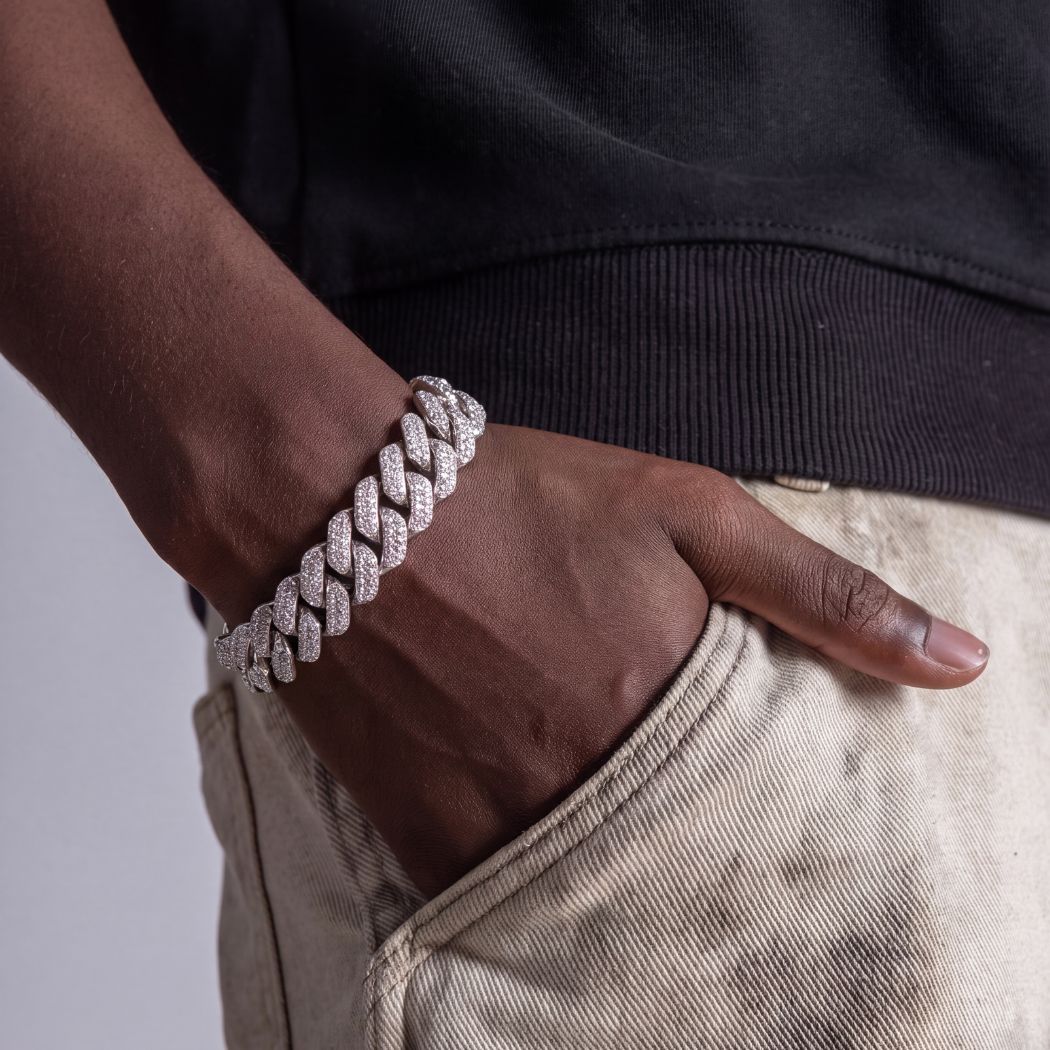
Between 6 and 10 mm your wrist itself becomes a factor. The gold-tone iced out cuban bracelet in 6, 8 and 10 mm, the 6 mm byzantine king's bracelet and the 10 mm jubilee bracelet come into their own from roughly a 17 cm (6.7in) wrist.
From 12 mm you genuinely need room. You can see that in what gets made: the 12 mm moissanite cuban bracelet exists only in 19 and 22 cm (7.5 and 8.7in), and not in 18.
4. Links or stones: the fit is different
A link bracelet may sit tight. Cuban, figaro, rope, king's link and jubilee are built from links that move over each other, so the band follows your wrist. On the smaller of two sizes a bracelet like that sits comfortably.
A bracelet with a continuous row of stones works the other way around. On the silver-tone tennis bracelet in 3 and 5 mm or the 5 mm moissanite tennis bracelet the sparkle lives in the row being able to rotate. If it turns along as you move your hand, the stones keep catching a different angle. If it sits tight, the same row stays face up and you lose half the effect.
Too loose is a problem here, and most guides skip that detail. The clasp weighs more than the rest of the band. Give it more than about 2 cm of slack and that clasp rotates to the top of your wrist, leaving you looking at the lock all day.

5. The families, with their sizes
Cuban. The flat, wide link that looks like one line across your wrist. In stainless steel in 3, 5 and 7 mm, in gold tone (five layers of PVD) and silver tone (bare polished steel), all three in 18, 20 and 22 cm (7.1, 7.9 and 8.7in). In 18K gold plated over 925 silver in 5 mm, and iced out with VVS cubic zirconia in 6, 8 and 10 mm. See the cuban bracelet collection.
Tennis and cluster. One continuous row of VVS cubic zirconia in 3 or 5 mm, in 18 and 20 cm (7.1 and 7.9in). The tennis cluster in 10 and 12 mm, in 18 and 21 cm (7.1 and 8.3in), gives three rows instead of one. Moissanite graded VVS D on solid 925 silver comes in 5 mm, also in 18 and 20 cm (7.1 and 7.9in).
King's link and byzantine. Dense and round, the same from every side. In stainless steel 5 mm, in 925 silver and 18K gold plated 2.5 mm, byzantine 6 mm. All of it in 18, 20 and 22 cm (7.1, 7.9 and 8.7in), gathered in the king's link bracelet collection.
Rope, figaro and jubilee. Rope twists and therefore flickers as you move, 3 mm in 16 to 22 cm (6.3 to 8.7in). Figaro has a rhythm of short and long links, 3 and 5 mm in 16, 18 and 20 cm (6.3, 7.1 and 7.9in). Jubilee is the wide watch band without the watch, 10 mm in 18, 20 and 22 cm (7.1, 7.9 and 8.7in), also in rose gold tone.

6. Material decides where it can go
A bracelet takes more punishment than a chain. Your hand hits table edges, a keyboard and a door handle all day, and it goes under the tap with you.
Stainless steel is the most durable build in the store. The silver-tone versions are bare polished steel; on the gold-tone versions the color is five layers of PVD, bonded to the metal at molecular level in a vacuum chamber instead of being electroplated on. Washing your hands and rain are no problem, and the silver-tone versions can also go in the shower; take the gold-tone versions off before the shower. The pool is out for both. We use it for cuban, rope, figaro, jubilee and the 5 mm king's link bracelet.
The nickel-free copper alloy with five layers of PVD sits under everything iced out, including the iced out bracelets and the tennis line. That finish is hard, but the alloy underneath is more sensitive to moisture than stainless steel. So this one does not come along into the shower, to the gym or into the pool.
Solid 925 sterling silver is 92.5% pure silver with copper for strength. No layer that can wear through, but softer, so you pick up fine marks sooner here. On 18K gold plated, 2.5 microns of gold sit over that same silver core.

7. Two bracelets on the same wrist
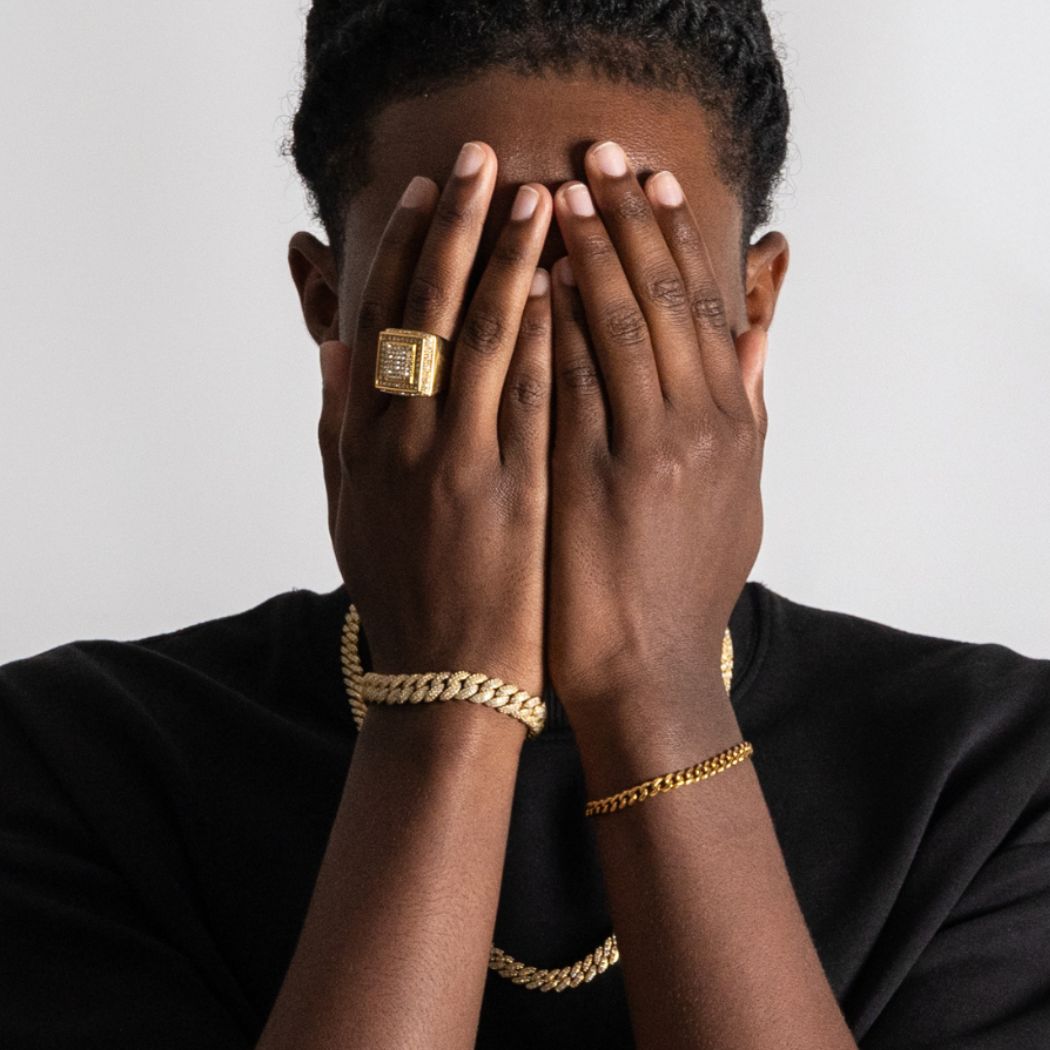
Stacking two works, but not in the same width. Two 5 mm bands side by side look like one 10 mm band with a seam in it. Take one of 3 or 5 mm and one of 8 or 10 mm, and it stays clear which one leads.
Keep the finish consistent. Gold-tone PVD and 18K gold plating have a different color temperature: the plated gold is warmer and deeper. Next to each other on one wrist that looks like a mistake rather than a choice.
If you wear a watch, count it as the wide band. Carrying a set through to your neck, keep the same finish but not the same width: a wrist sits further from the eye than a neck, so a bracelet may be one step wider there.

Four mistakes you spot immediately
- Ordering your wrist circumference as your bracelet size. Without that 1.5 cm of slack the band pinches and will not slide over your wrist bone.
- Taking a tennis bracelet in the tight size. The same row of stones then stays face up and half the sparkle disappears.
- Taking an iced out bracelet into the shower. The copper alloy is more sensitive to moisture than stainless steel, and you see it at the clasp first.
- Stacking two bracelets in the same width. Together they look like one wide band with a seam.
Where do you start?
Measure first. If you need 18 or 20 cm (7.1 or 7.9in) and want one that survives everything, start with the silver-tone cuban bracelet in 5 mm.
If you want sparkle, the 3 mm tennis bracelet is the quiet way in and the 8 mm iced out cuban the loud one. If you want precious metal, the moissanite tennis bracelet on 925 silver is the alternative.
Look further in the bracelets collection, at the jubilee bracelets, or in jewelry for him if you want a chain to go with it.
Frequently asked questions
What bracelet size do I need?
Measure your wrist circumference and add about 1.5 cm. Under a 17 cm (6.7in) wrist you need 18 cm (7.1in), between 17 and 20 cm (6.7 and 7.9in) you need 20 cm (7.9in), and above roughly 20 cm (7.9in) you need 22 cm (8.7in).
How do I measure my wrist without a tape measure?
Wrap a strip of paper around your wrist where a watch sits, mark where it meets itself and lay it along a ruler. Measure at the end of the day, because that is when your wrist is thickest.
Should a bracelet sit tight or loose?
A link bracelet may sit tight, with about 1.5 cm of slack. A tennis or iced out bracelet wants slightly more, so the row of stones can rotate. Never give it more than 2 cm, because then the clasp turns to the top.
Which width suits a slim wrist?
Up to 5 mm works on every wrist. Between 6 and 10 mm comes into its own from roughly a 17 cm (6.7in) wrist. From 12 mm and wider you need room: the 12 mm moissanite cuban bracelet exists only in 19 and 22 cm (7.5 and 8.7in).
Can I wear an iced out bracelet in the shower?
No. Iced out and tennis are built on a nickel-free copper alloy with five layers of PVD, which is more sensitive to moisture than stainless steel. The silver-tone stainless steel cuban, rope, figaro, jubilee and 5 mm king's link bracelets are fine: that is bare stainless steel with no coating. The gold-tone versions with PVD are not.
Can I wear two bracelets at once?
Yes, but not in the same width, because then they look like one band with a seam. Combine 3 or 5 mm with 8 or 10 mm and keep the finish consistent. A watch counts as the wide band.